Learning how to unclog a tub takes about 30 minutes, and almost all of the work happens within a foot of the drain opening. Work the fixes in order, gentlest and cheapest first, and stop the moment the water runs clear. The step most homeowners skip is the one that makes plunging work at all, and it takes ten seconds.
The Short Version
If you only read one section, read this one.
- Bail out the standing water.
- Pull the stopper or strainer and hook out the hair with a plastic claw tool.
- Seal the overflow plate with a wet rag, then plunge 10 to 15 strokes.
- Still slow? Remove the overflow plate and run a drain snake in through the overflow opening, never down the tub floor drain.
- Reinstall everything and test with four inches of water.
Which method you reach for depends on what the tub is doing:
| Symptom | Most likely cause | Start with | Time |
|---|---|---|---|
| Drains slowly, visible hair at the opening | Hair wrapped on the stopper stem | Stopper removal + claw tool | 10 min |
| Full of standing water, nothing moves | Packed clog at or below the drain shoe | Bail, then plunge with overflow sealed | 20 min |
| Drains fine, then clogs again in weeks | Debris caught deeper in the trap | Snake through the overflow | 30 min |
| Tub and sink both slow, toilet gurgles | Branch or main line issue | Call a plumber, skip chemicals | Same day |
| Drains fine but smells sour | Soap and biofilm coating the pipe | Baking soda flush, monthly | 20 min |
Tools You Will Need
Costs are rough ballparks and vary by region and brand. The whole kit usually costs less than one service call.
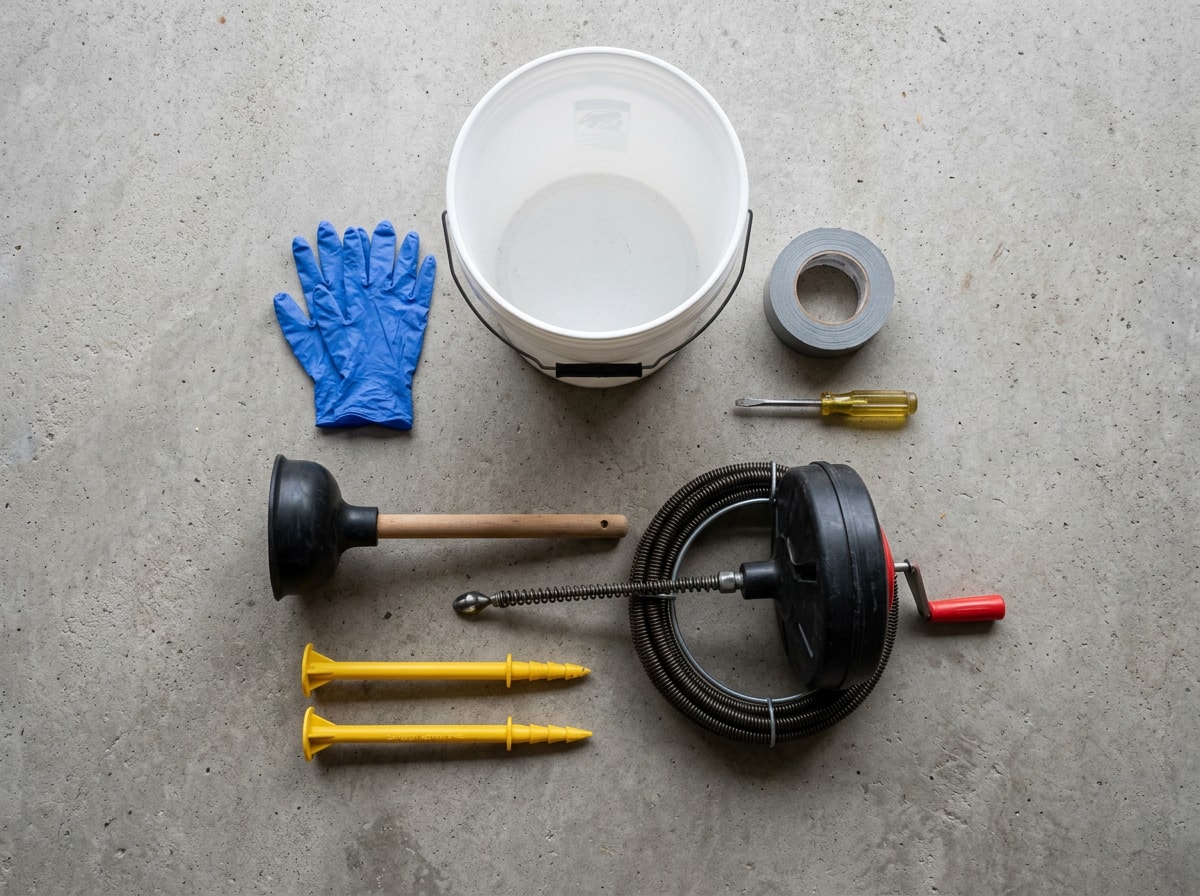
- Cup plunger with a flat rim, $6 to $12. Flat rim, no flange. A flanged toilet plunger cannot seal against a flat tub floor.
- Hand crank drain snake, 15 to 25 feet, $12 to $25
- Plastic zip tool or drain claw, $3 to $6
- Gloves and a drop cloth for the tub floor, $5 to $15
- Small flathead screwdriver for the overflow plate, $4
- Bucket for bailing, $5
- Duct tape or a thick wet rag to seal the overflow, on hand
- Petroleum jelly for the plunger rim, $3
- Disinfectant and a hair catcher, $10 to $20
A splined bathtub drain removal key is only needed if you are pulling the whole drain basket, which most clogs do not require.
How to Unclog a Tub Drain, Step by Step
Work down this list in order. Physical removal first, chemicals last. Stubborn clogs often need two methods stacked, so do not give up after one attempt.
1. Remove the Standing Water
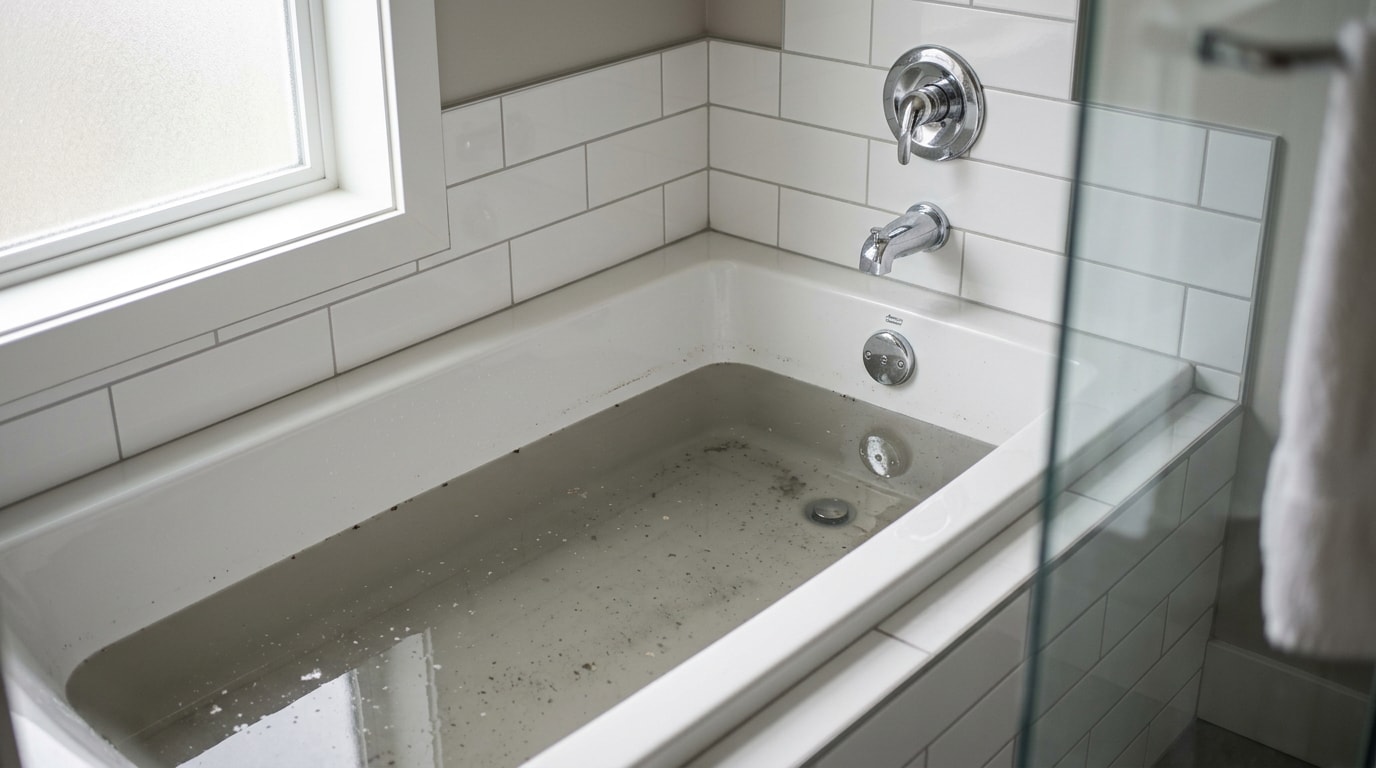
Put gloves on, then bail the tub with a bucket until the water sits below the drain.
A wet/dry vacuum on its liquid setting is faster and pulls a surprising amount of sludge straight out of the opening.
Dump the water outside or into a toilet. Do not pour hair and grease laden water into your kitchen sink. You will just relocate the clog to a pipe that is harder to reach.
2. Remove the Stopper or Strainer
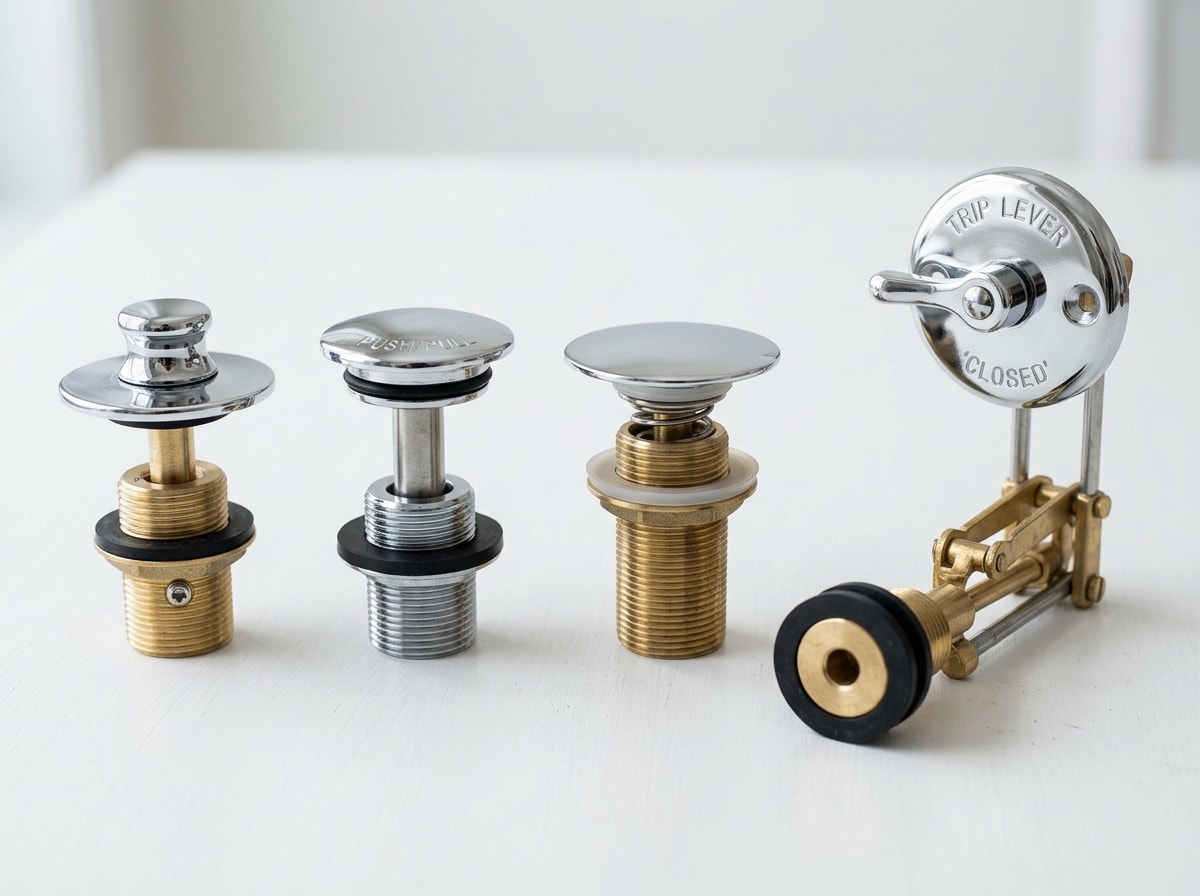
How you get the stopper out depends entirely on the mechanism:
- Lift and turn: twist the knob counterclockwise while holding the body. Look for a tiny setscrew under the knob.
- Push and pull: unscrew the cap counterclockwise, then lift the shaft out.
- Toe touch: press to open, then unscrew the cap.
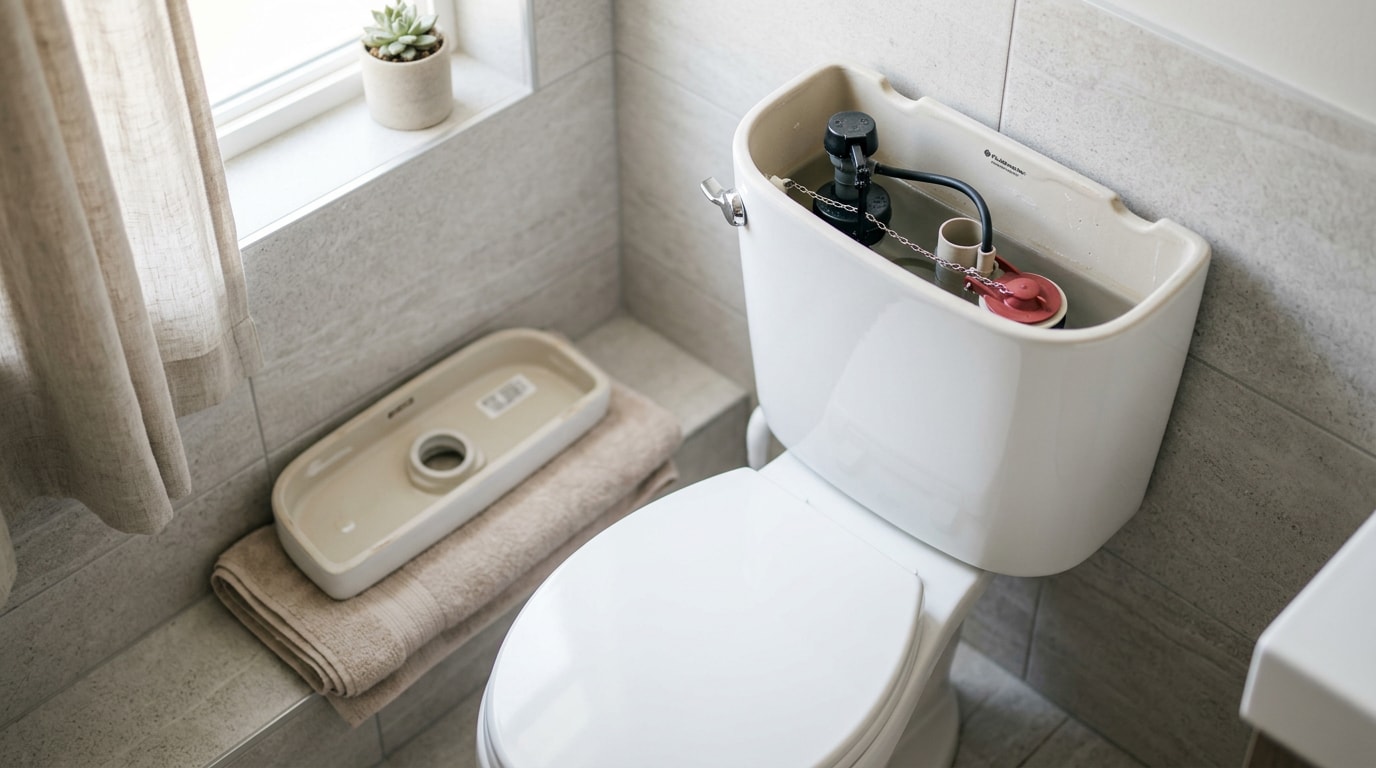
- Trip lever: a lever on the overflow plate operates an internal plunger. Remove the two plate screws and pull the whole linkage up and out through the overflow.
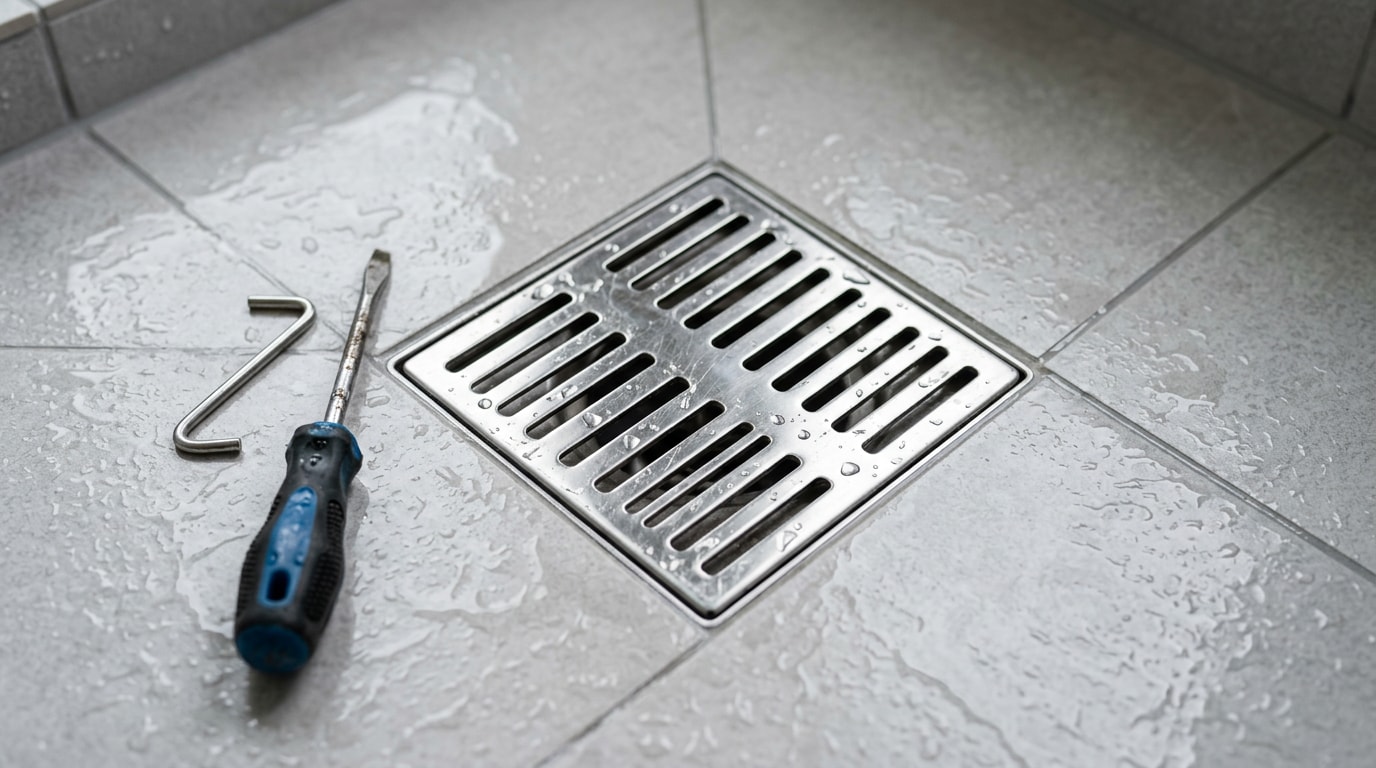
Some stoppers lift free by hand. Others need pliers. A flat strainer usually pops up with a fingernail or a flathead screwdriver wedged underneath.
Lay a rag over the open drain while you work. Dropped screws vanish down an open pipe instantly.
Then pull the hair. Slide the zip tool or drain claw down, hook the mass, and pull slowly. Needle nose pliers work on anything you can see. Scrub the stopper stem and linkage before reinstalling, because fresh gunk grabs onto old gunk.
One detail worth knowing on trip lever tubs: the brass plunger hanging inside the overflow tube sits right above the waste tee, so it collects gunk on its own. Pull the linkage all the way out and clean it before you assume the clog is deeper. The way that plunger rides inside the bath waste and overflow assembly is exactly why it acts as a debris trap.
3. Plunge With the Overflow Sealed
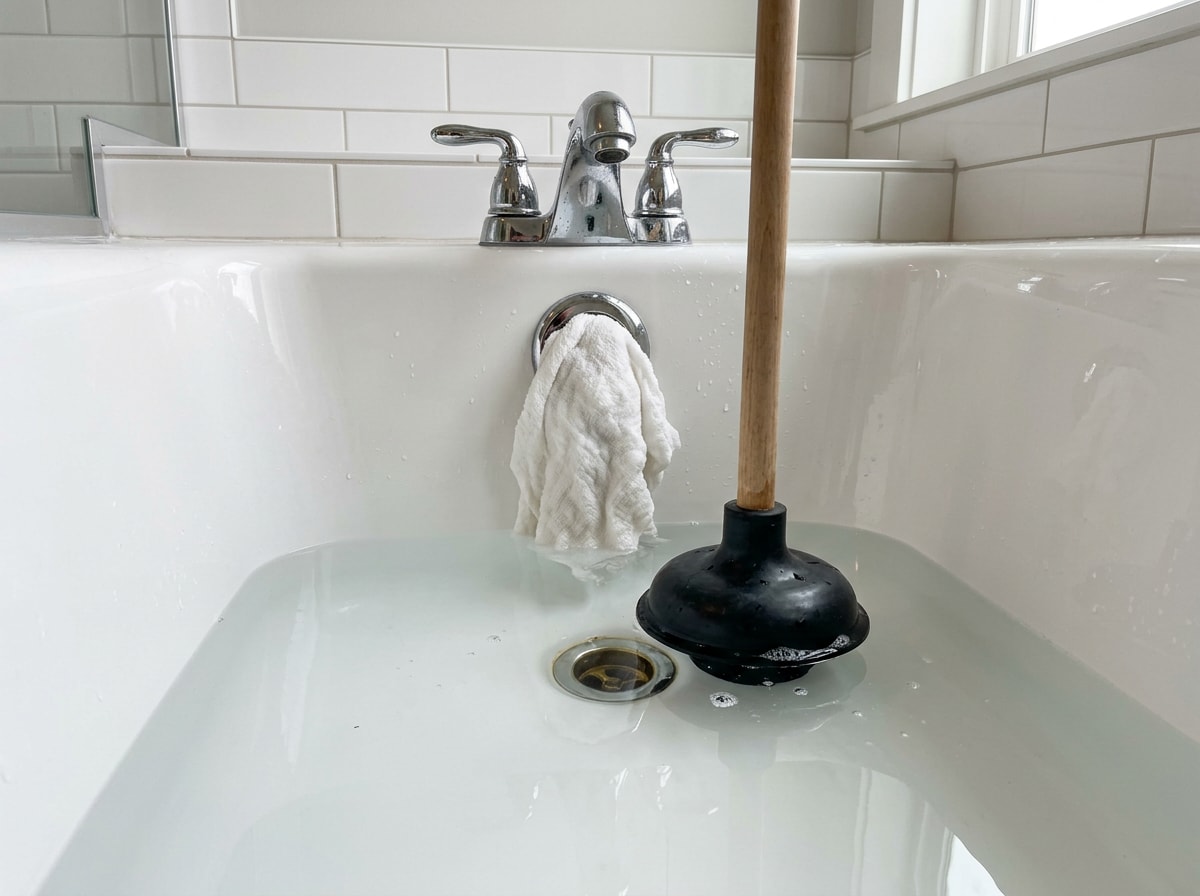
Seal the overflow first. Cover the overflow plate with duct tape, or stuff a thick wet rag into the opening so air cannot escape.
Skipping this is the number one reason home plunging fails on a tub. Your suction bleeds straight out the back channel instead of hitting the clog.
Run an inch or two of water, enough to cover the plunger cup. Smear a little petroleum jelly around the rim for a tighter seal on the tub floor.
Center the cup over the drain, press down to push out the trapped air, then plunge 10 to 15 firm strokes. Keep the seal intact on the upstroke, since that is where the pull happens.
Pull the plunger off and watch the water. If the level drops, you moved the blockage. Run the tap for 30 seconds to confirm. Still slow? Repeat once, then move on.
4. Snake the Drain Through the Overflow
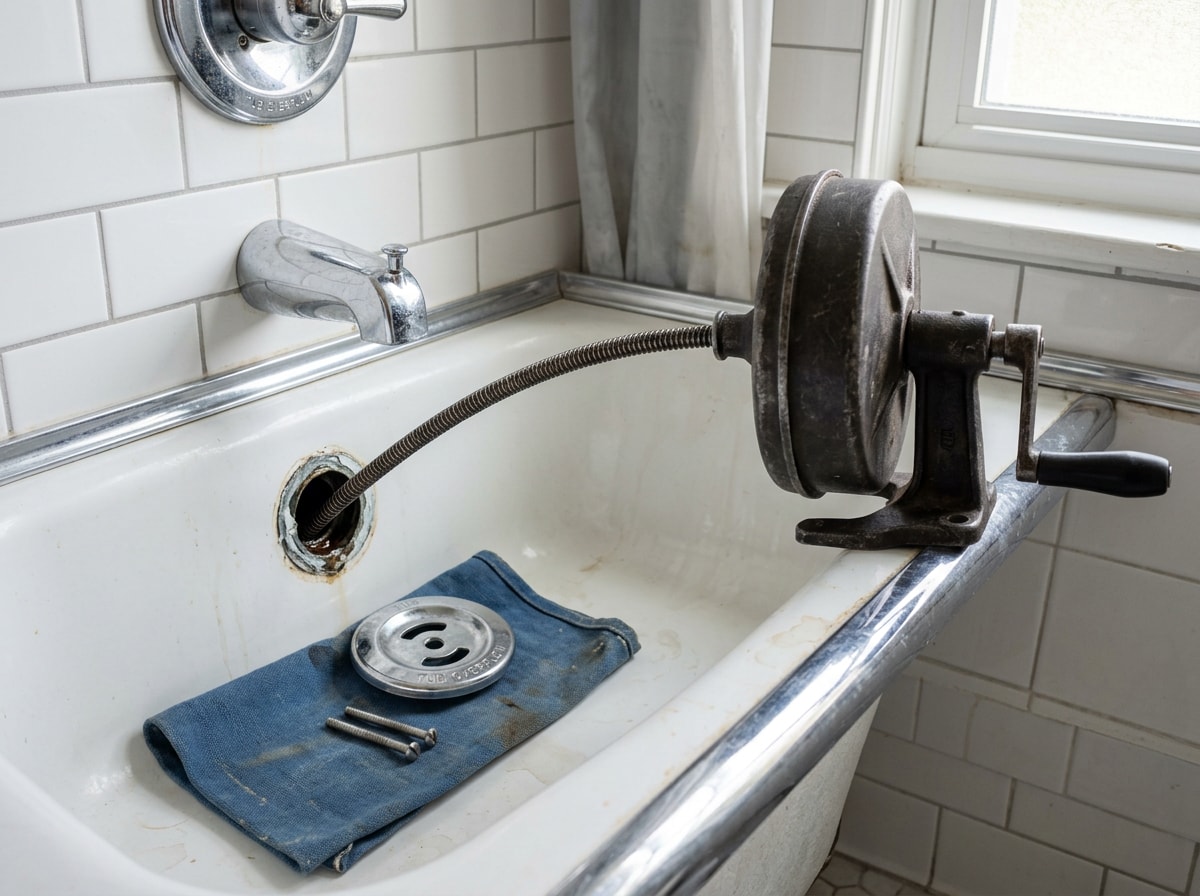
Never feed a drain cable down the tub floor drain. The drain shoe turns sharply just below the tub, and forcing a cable through that bend can scratch, unseat, or crack the fitting.
Remove the overflow plate and run the cable in through the overflow opening instead. It enters the waste tee at a much gentler angle. Lay a drop cloth in the tub first.
Feed the cable until you feel resistance, usually a few feet down near the P-trap. Lock the drum, crank the handle, and twist to either break up the clog or hook it.
Pull the cable back slowly, wiping it as it comes, then flush with hot water. If the drain is still sluggish, repeat.
One caution: if the cable jams hard against something solid and will not turn, back it off. That is almost always a fitting, not the clog, and forcing it can damage the joint.
5. Use Baking Soda and Vinegar Only as Maintenance
Pour half a cup of baking soda into the drain, then half a cup of white vinegar. Cover the drain and the overflow so the reaction stays in the pipe. Wait 15 minutes, uncover, then pour a pot of hot water down slowly.
Here is the part most guides skip. This is a cleaning method, not a rescue.
The fizz loosens soap scum, cuts odor, and helps flush light grease film. It does not dissolve hair. Hair is protein, and a mild acid base reaction has no meaningful effect on it. The bubbling you see is carbon dioxide, not a solvent going to work.
Use it as a monthly flush or when a drain smells sour. If you have a packed hair clog and the plunger did not move it, skip this and go straight to snaking.
6. Treat Chemical Drain Cleaners as a Last Resort
A caustic opener sitting on top of a solid hair clog does not drain away. It pools against your pipe and your tub finish while you wait.
If you do use one, follow the label exactly. Never mix two drain products, and never combine one with bleach or ammonia. University extension guidance on safe use of household chemicals is blunt about it: mixing chlorine bleach with acidic cleaners such as drain openers can release fumes strong enough to be fatal.
Ventilate the bathroom, wear eye protection and gloves, and tell any plumber you call afterward exactly what you poured down there. A pipe holding standing caustic is a burn hazard for whoever opens it next.
7. Reassemble and Test
Reinstall the stopper and the overflow plate, then run hot tap water for a full minute.
Fill the tub about four inches deep and pull the stopper.
The pass or fail benchmark: that water should disappear in a steady swirl with no pooling and no gurgling at the drain. If it hesitates or backs up, the clog is still partly there. Go back to plunging and snaking.
Why Your Bathtub Will Not Drain
A tub drains slowly because hair, soap scum, dirt, and mineral scale collect in the stopper assembly or in the trap just below it.
Hair is the usual culprit. It tangles around the stopper stem and catches everything that washes past.
Shed hair from shampooing and trimmed whiskers from shaving end up in the same place. Soap scum acts like glue. Sand, grit, and body oils pack the mass tighter over time. Hard water minerals narrow the pipe walls quietly in the background.
Before you touch a tool, take 30 seconds to look. Shine a light into the drain opening, then into the overflow plate under the faucet. Note whether the water sits still or just drains sluggishly.
On the tub calls our team runs across northern and central New Jersey, the blockage is almost always in the first 18 inches of pipe, and the single most common reason a homeowner already failed to fix it is an unsealed overflow during plunging.
How to Prevent Future Bathtub Clogs
A simple cadence beats a scramble every time.
Weekly: run hot water down the drain for a minute after the last shower, and brush long hair before bathing so shed strands end up in the brush, not the pipe.
Monthly: clean the hair catcher or drain cover, wipe soap film off the stopper, and run a baking soda flush if things smell musty.
Every few months: pull the stopper completely, clear gunk from the stem and linkage, and run a preventive snake through the overflow on heavily used tubs.
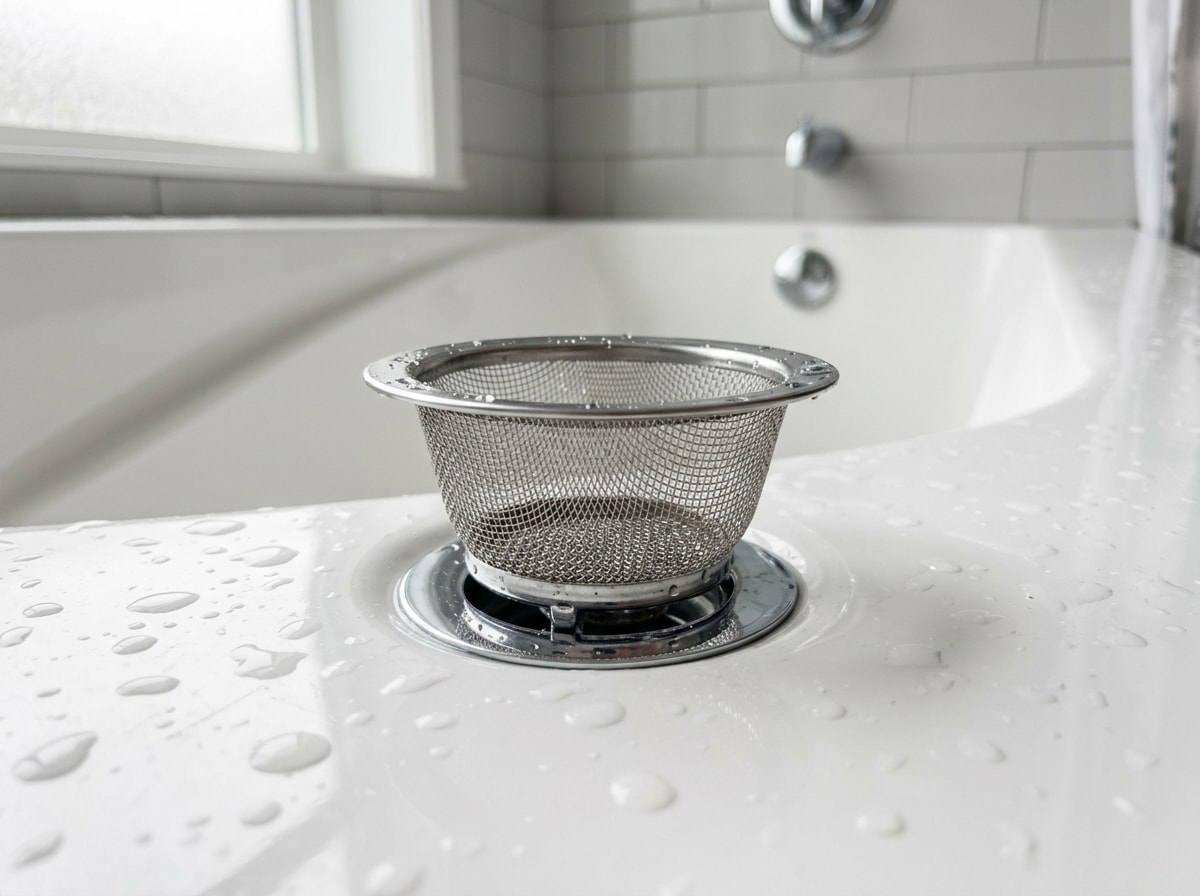
Water chemistry explains why identical plumbing clogs at wildly different rates. High mineral content reacts with soap to form the sticky scum that hair sticks to, and the USGS notes that hard water causes mineral buildup in plumbing and fixtures and makes soap perform poorly. If your water is hard, expect faster buildup and shorten the intervals above.
When to Call a Plumber
Some symptoms point past the tub itself:
- The clog comes back weekly or monthly, which usually means hair is catching in the drain shoe or trap.
- Two or more fixtures drain slowly at the same time.
- The toilet gurgles when the tub drains. That can signal a venting or main line problem, and it often shows up alongside other toilet flushing symptoms. Skip chemicals here, since they mostly push a blockage deeper.
- Water backs up into another fixture, which can point to a sewer line problem.
- You have worked through the steps above twice and the tub still drains slowly.
A plumber can camera the line, power auger past the trap, and confirm whether the problem is local or in the building drain. Professional drain cleaning is also the safer call when the tub is old or the drain assembly is corroded, since a brittle waste and overflow can break loose under auger pressure.
Aumenta Plumbing is a licensed New Jersey plumbing contractor serving Westfield, Mountainside, and the surrounding towns. If the tub is still holding water after two rounds, get a free estimate instead of pouring another bottle down the drain.
FAQ
What is the best thing to unclog a bathtub drain?
Physical removal. Most hair and soap scum sits in the stopper area or the trap just below it, so pull the stopper and hook the debris with a drain claw or zip tool before trying anything else.
Does baking soda and vinegar really unclog a bathtub drain?
Partly. It loosens soap scum and knocks out odors, which makes it a good monthly maintenance flush. It will not clear a packed hair clog. For that you need a claw tool or a drain snake.
Can you pour boiling water down a bathtub drain?
It is fine for metal waste lines but risky for PVC, where sustained heat can soften pipe and stress glued joints. Very hot tap water is the safer choice. Avoid pouring boiling water directly onto acrylic or fiberglass tub surfaces.
What dissolves hair in a bathtub drain?
Only strong alkaline drain chemicals genuinely break down hair, and those carry real burn, fume, and pipe damage risks. Mechanical removal with a claw or snake is safer, faster, and clears the clog completely rather than partially.
Will Drano or a similar cleaner work on a tub full of standing water?
Usually not well. The product dilutes in the standing water before it reaches the clog and then sits against your tub finish. Bail the water and clear the hair mechanically first.
Why is my bathtub draining slowly but not clogged?
Soap scum and mineral scale coating the pipe walls narrow the opening without blocking it. A partially closed stopper, a dirty trip lever plunger, or a venting issue can also slow flow while water still moves.
How do plumbers unclog a bathtub drain?
They pull the waste and overflow trim, run a powered auger in through the overflow to the trap and beyond, then verify flow. If the drain clogs again quickly, they camera the line to find the real restriction.
How long should it take to unclog a tub?
Budget 15 minutes for a stopper level hair clog and about 30 to 45 minutes if you need to plunge and snake. If you are past an hour with no improvement, the blockage is likely past the trap.
How much does it cost to have a bathtub drain unclogged?
It depends on access, clog depth, and whether a camera inspection is needed, so ask for a flat quote before work starts. Contact us for a free estimate on your tub.