If you're asking why won't my toilet flush, the answer is almost always one of two things: the hardware inside the tank, or a blockage past the bowl. Most causes are cheap, visible, and fixable in under an hour with no special tools. A few are quiet warnings from the drain line, and those are the ones worth catching early.
First, Find Out If It's the Tank or the Drain
Before you replace a single part, run this test. It takes one minute and it decides everything you do next.
- Fill a bucket with about two gallons of water.
- Pour it into the bowl fast, from roughly waist height.
- Watch what happens.
If the bowl clears in one rush, your drain is open and the problem is inside the tank (water level, flapper, chain, or handle).
If the water rises, stalls, or drains in slow motion, the problem is downstream: the trap, the branch line, the vent, or the main sewer.
In our own service calls across Union and Morris County homes, the tank side wins that split more often than homeowners expect. People assume clog, open the plunger cabinet, and never lift the lid on a flapper that stopped sealing months ago.
1. The Toilet Is Clogged
A clog is the single most common reason a flush fails. The giveaway is the water level: the bowl fills higher than normal and drains slowly or not at all, instead of producing a weak swirl.
Usual culprits are too much paper, wipes labeled "flushable," hygiene products, and kids' toys.
Start with a flange plunger, the kind with a rubber sleeve that folds out to seal the drain opening. If the bowl is near the rim, bail some water out first, then seat the flange and pump steadily for 15 to 20 seconds.
If the plunger won't move it, a toilet auger (also called a closet auger) reaches past the toilet trap without scratching the porcelain.
For a stubborn partial clog, heat a gallon of water until it's hot but not boiling, add a squirt of dish soap, pour it in, and wait about 15 minutes before plunging again. Never pour boiling water into the bowl. The thermal shock can crack porcelain.
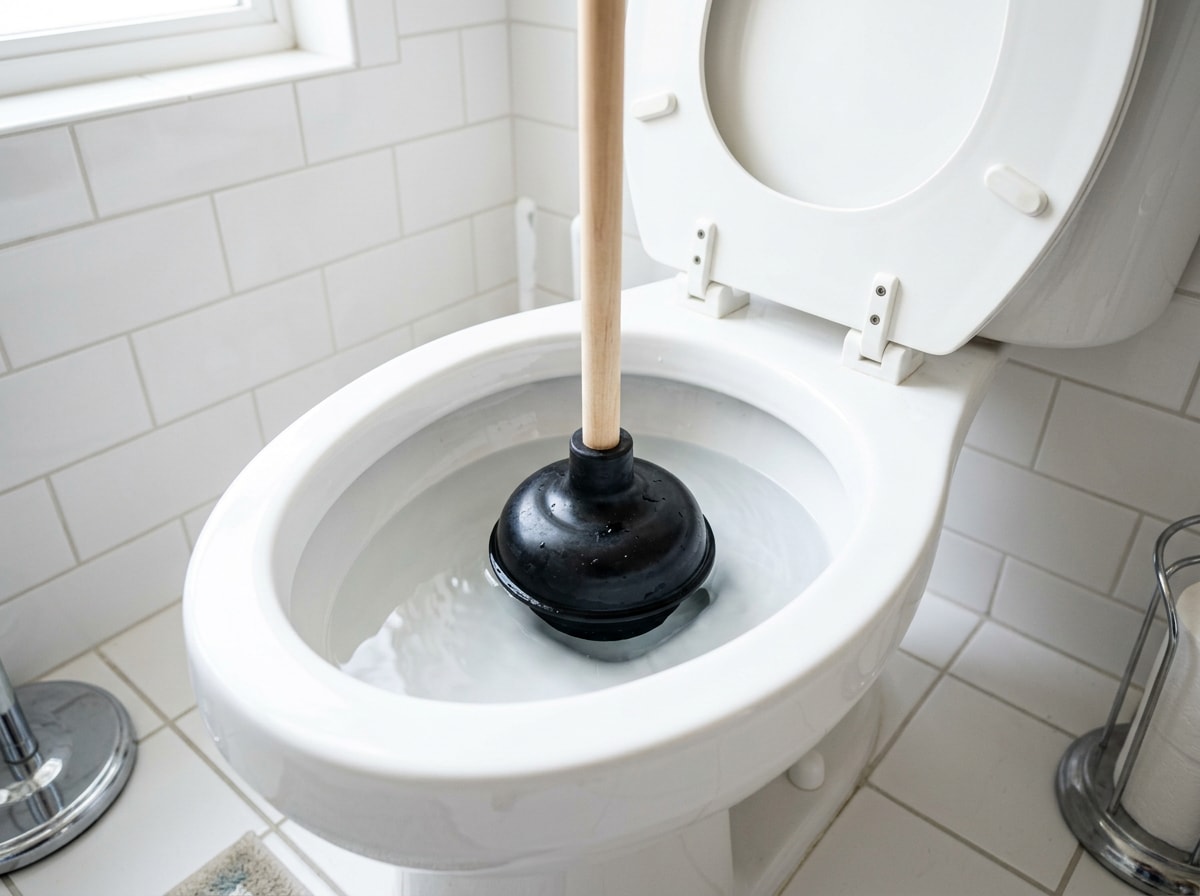
Still clogged after two rounds? A professional drain cleaning service can clear it without risking damage to the trap.
2. Low Water Level in the Tank
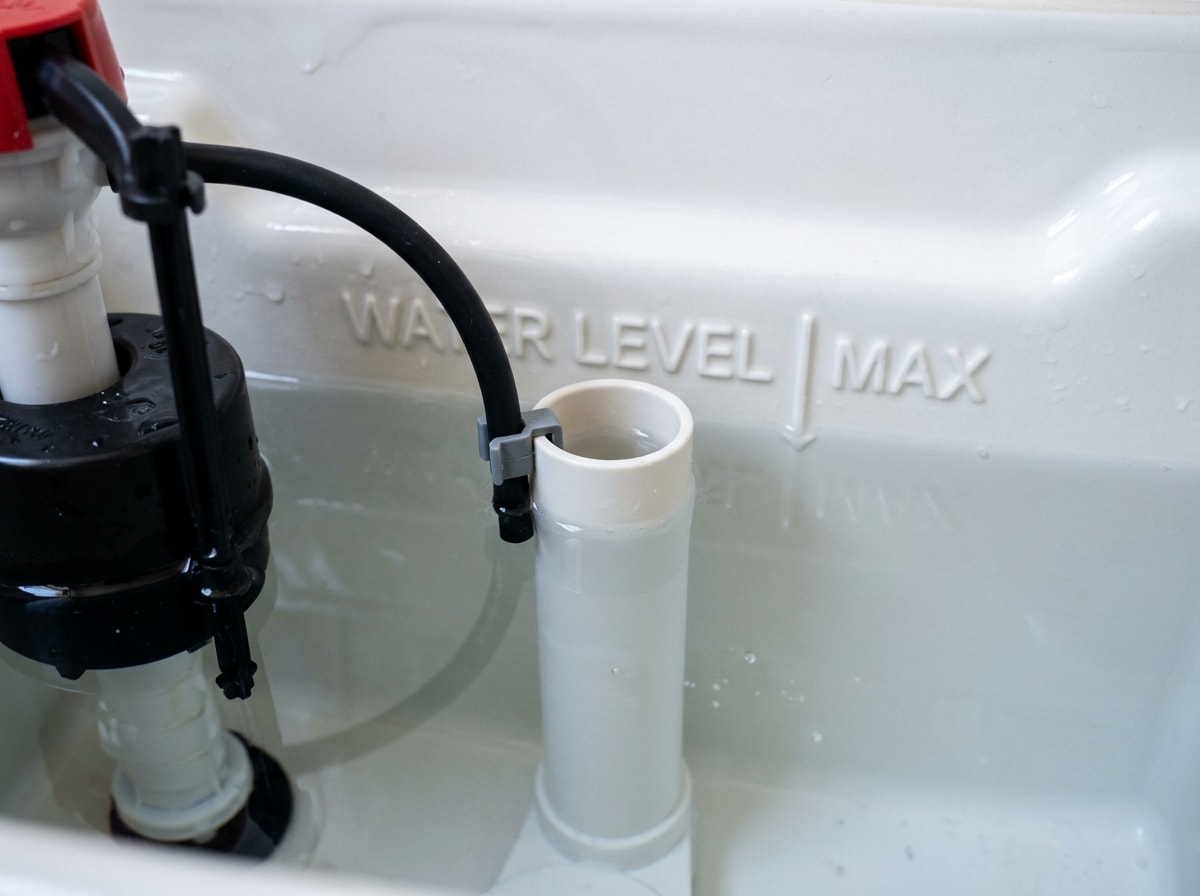
A toilet flush is a siphon, and the siphon needs a full tank to start. If the tank water sits below the fill line, you get a weak flush that leaves paper behind every time.
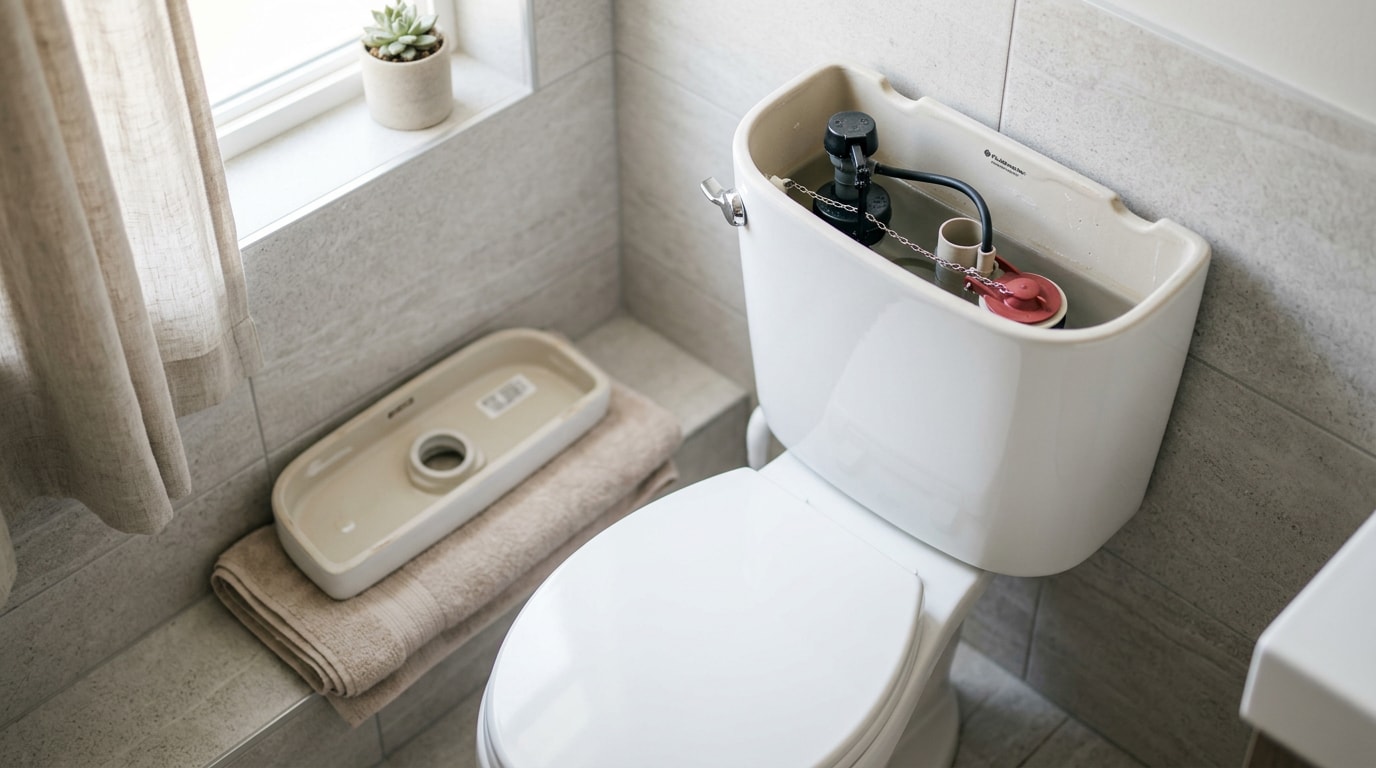
Take the lid off and look for the manufacturer's fill line molded into the porcelain. No marking? Water should sit about an inch below the top of the overflow tube.
- Older ball float: bend the float rod down slightly.
- Modern cup float: turn the adjustment screw or move the clip on the fill valve.
Here's the diagnostic that separates this from a clog: if the toilet only flushes fully when you hold the handle down, it's a water-volume problem, not a blockage.
Know What "Normal" Looks Like for Your Toilet
Before you hunt for a fault, confirm what normal means for your fixture. Flush volume dropped sharply over three decades, and a newer low-flow model is supposed to feel gentler than the one you grew up with.
| Toilet generation | Gallons per flush | What a normal flush looks like |
|---|---|---|
| Pre-1994 | About 3.5 gpf | Fast, forceful, high water line in the bowl |
| 1994 to present (federal maximum) | 1.6 gpf | Quicker swirl, lower bowl water line, still clears in one go |
| WaterSense labeled | 1.28 gpf | Softer sound and shorter cycle, not a defect |
Design improvements let toilets use 1.28 gallons per flush or less while still providing equal or superior performance, which is 20 percent less water than the current federal standard of 1.6 gallons per flush. So a 1.28 gpf unit clearing the bowl in one flush is working exactly as designed.
One update most troubleshooting articles miss: EPA revised the specification in 2024, eliminating the effective flush volume calculation for dual-flush toilets and setting the same 1.28 gallon maximum for both single-flush toilets and the full-flush mode of dual-flush models . If you bought a dual-flush toilet years ago and its "big" button feels weaker than a neighbor's newer one, that history explains why. You can check the current rules on the EPA WaterSense residential toilets page.
To find out which generation you own, lift the tank lid and look for a date stamp molded into the underside or the back inner wall.
3. A Faulty or Misaligned Flapper
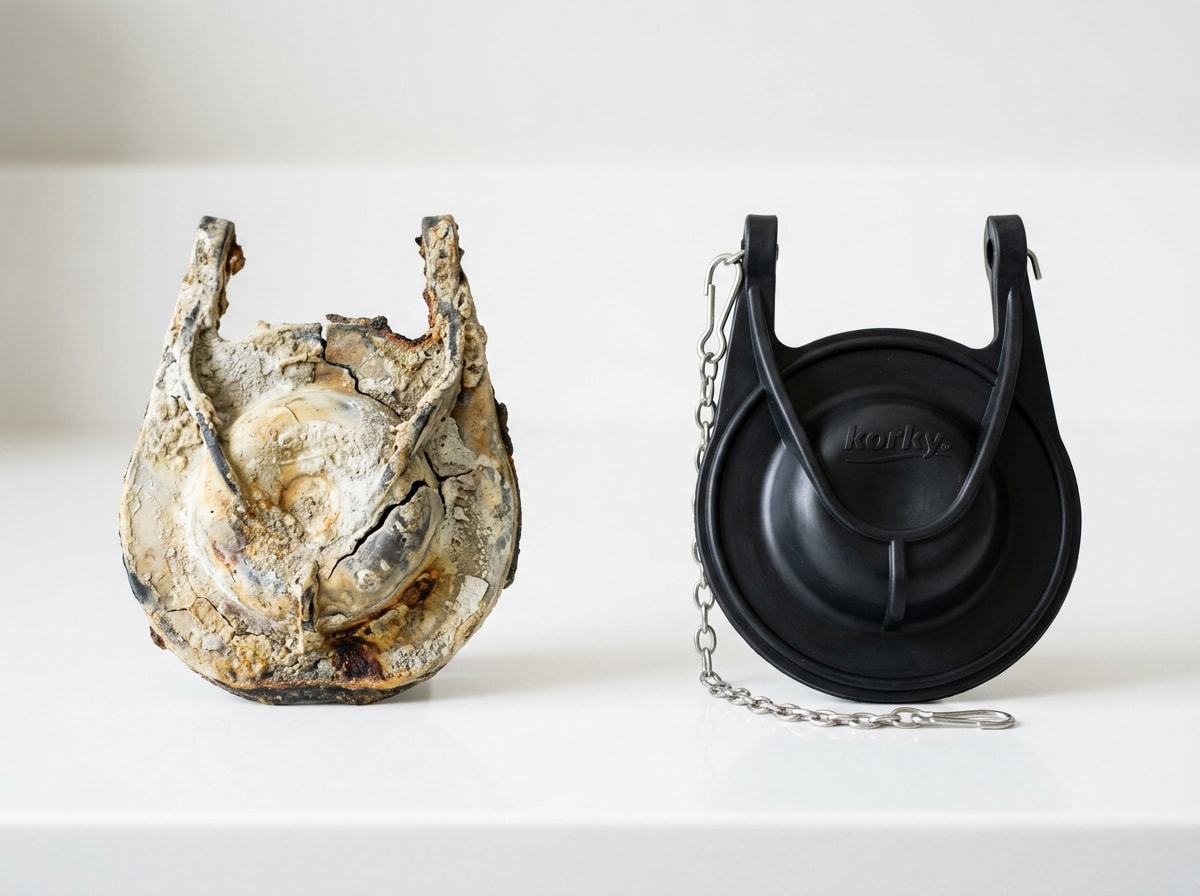
The flapper is the rubber seal at the bottom of the tank that lifts to release water. When it warps, stiffens, cracks, or seats crooked, water dribbles into the bowl between flushes and the tank never builds enough volume.
To confirm it, run the food coloring test: add several drops of dye to the tank, then wait 20 minutes without flushing. Color bleeding into the bowl means the seal is failing.
A replacement flapper usually runs under $15 and swaps out in about ten minutes. Match the size to your flush valve opening. Two-inch and three-inch are both common, and a mismatch is the top reason a brand-new flapper still leaks.
One habit to drop: in-tank drop-in bleach or chlorine pucks. They chew through flappers, gaskets, and other tank parts far faster than normal wear.
4. The Lift Chain Is Broken or Disconnected
If the handle flops down with no resistance at all, the lift chain has come off the lift arm. Reattach the clip and you're done in under a minute.
Slack matters more than people expect:
- Too much slack: the flapper never lifts far enough to flush.
- Too little slack: the flapper can't seat, so the tank drains continuously.
- Correct: just enough that the flapper closes fully and sits flat.
If the handle moves but nothing happens, check the mounting nut behind the flush lever inside the tank. A loose handle produces the same symptom.
5. Clogged Rim Jets
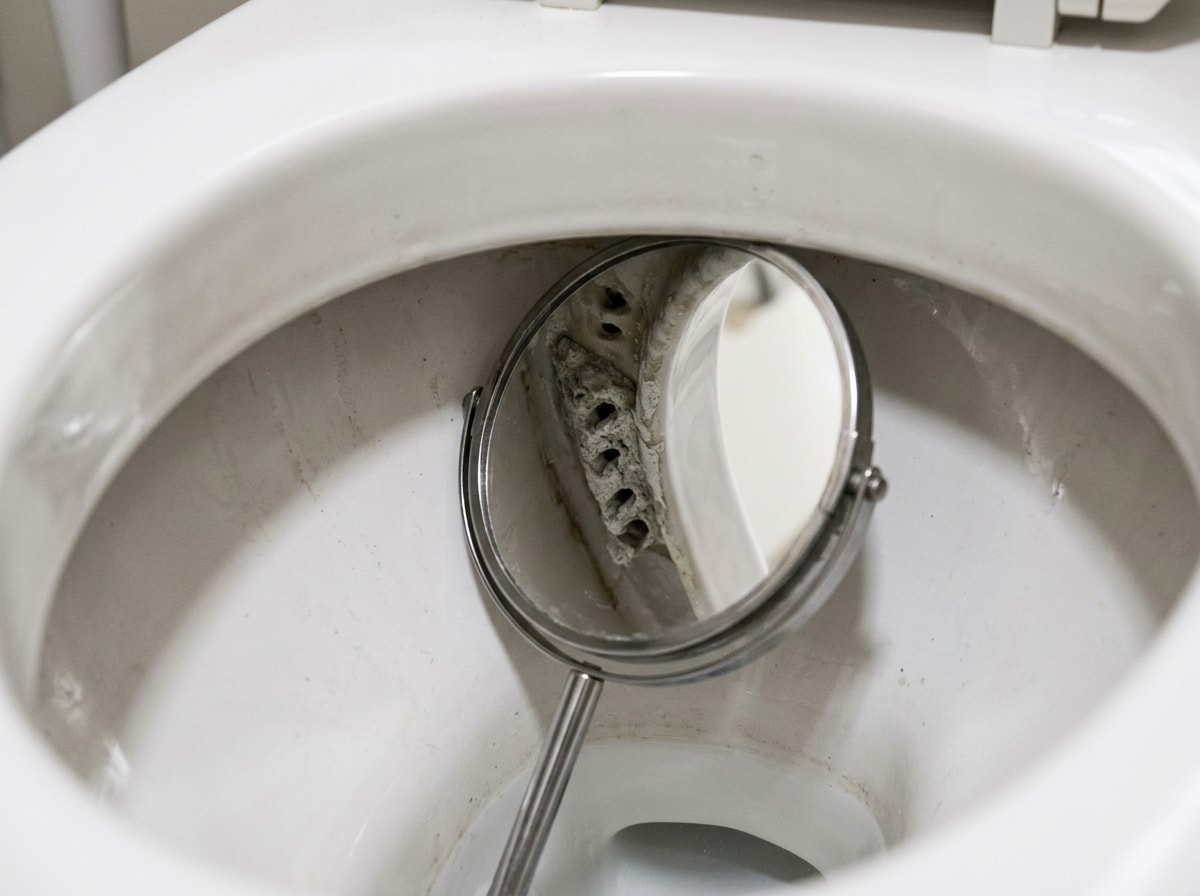
Look under the bowl rim and you'll find a row of angled inlet holes, the rim jets that create the swirl. When mineral deposits or bacterial buildup choke them, water dribbles straight down the sides instead of rotating, and waste stays put.
Use a hand mirror to inspect them rather than contorting yourself. Chalky white or gray crust means hard water scale. Orange or black staining points to bacterial growth.
Fix it by pouring a descaling solution down the overflow tube so it feeds the jets directly, then clearing each hole with a stiff wire or a small Allen key. In hard-water homes, expect this to come back on a schedule.
6. The Water Shut-Off Valve Is Closed
Check this before you disassemble anything. The supply valve behind the toilet gets bumped closed surprisingly often during cleaning, which leaves one or two flushes in the tank before it runs dry.
Turn the handle counterclockwise to open it fully, wait for the tank to refill, and retest.
If the tank still won't fill, open the bathroom sink tap. No water there either means a main break or a utility outage, not a toilet problem.
If the valve feels stiff, weeps, or looks corroded, replace it rather than forcing it.
Not sure the toilet itself is worth another repair? Our toilet repair and installation team will tell you straight, and you can get a free estimate before anything gets ordered.
7. A Blocked Plumbing Vent
Your drain line needs air to equalize pressure as water moves through it. When the vent stack is blocked, the flush is starved of air and slows to a crawl.
The telltale sign is that the problem isn't confined to the toilet. Sinks and showers drain slowly, and drains gurgle when you flush.
Leaves, bird and insect nests, and winter ice-over at the stack opening are the usual causes.
You can flush the stack from the roof with a garden hose, or melt an iced vent from inside the attic with a hair dryer. Vent sizing and roof termination rules, including the larger diameter required in cold climates, are set out in Chapter 31 of the International Residential Code.
Roof work is a genuine fall hazard. For most homeowners, this is the point to hand it off.
8. A Main Sewer Line Clog
This is where DIY stops. The symptom set is unmistakable: multiple fixtures backing up at once, a shower drain that bubbles when an upstairs toilet is flushed, and sewage odor indoors.
Sewer blockages usually build over days or weeks, so a sluggish flush is the early warning worth acting on before it becomes a backup.
A confident homeowner can locate the cleanout and try a rented sewer auger. Tree roots, a collapsed pipe, or anything beyond auger reach needs camera diagnosis and hydro-jetting instead.
Worth knowing in advance: in most municipalities the buried lateral from your house to the public main is the property owner's pipe, which is why this becomes an out-of-pocket repair. Confirm with your local sewer authority, because the dividing line varies by town.
A sewer line repair crew can confirm the cause before anything gets dug up.
Bonus: Septic System Problems
If you're on septic rather than municipal sewer, add three more suspects:
- A clogged inlet screen
- A tank that's full and overdue for pumping
- Drain field saturation after heavy rain or flooding
The signal is every drain in the house slowing at once, often paired with soggy ground or odor over the drain field.
EPA advises that the average household septic system be inspected at least every three years, with tanks typically pumped every three to five years. Falling behind on that schedule is a common reason a flush turns sluggish with no toilet fault at all.
Septic tanks produce lethal gases. Never open or enter one. Call a licensed pumper.
What Each Fix Typically Costs
Prices vary by region and by how deep the problem sits. These are ballpark DIY ranges, not quotes.
| Fix | Typical DIY part cost | Time |
|---|---|---|
| Reattach lift chain | $0 | Under 5 minutes |
| Adjust tank water level | $0 | 5 to 10 minutes |
| Replace flapper | Under $15 | 10 to 15 minutes |
| Replace fill valve | $10 to $25 | 30 to 45 minutes |
| Flange plunger | $10 to $20 | Minutes per attempt |
| Toilet (closet) auger | $25 to $50 | 15 to 30 minutes |
| Main line clearing | Professional | Same-day service call |
How to Prevent Future Toilet Trouble
Most of what's on this page is avoidable with a few small habits:
- Flush toilet paper and waste only. "Flushable" wipes are the biggest repeat offender by a wide margin.
- Inspect tank components once a year (flapper, chain, fill valve) and replace anything stiff or crusted.
- Descale the rim jets on a schedule if you have hard water.
- Glance at the tank fill line whenever the lid is off anyway.
- Fix a sluggish flush while it's still just sluggish. A slow flush is the cheapest version of every problem above.
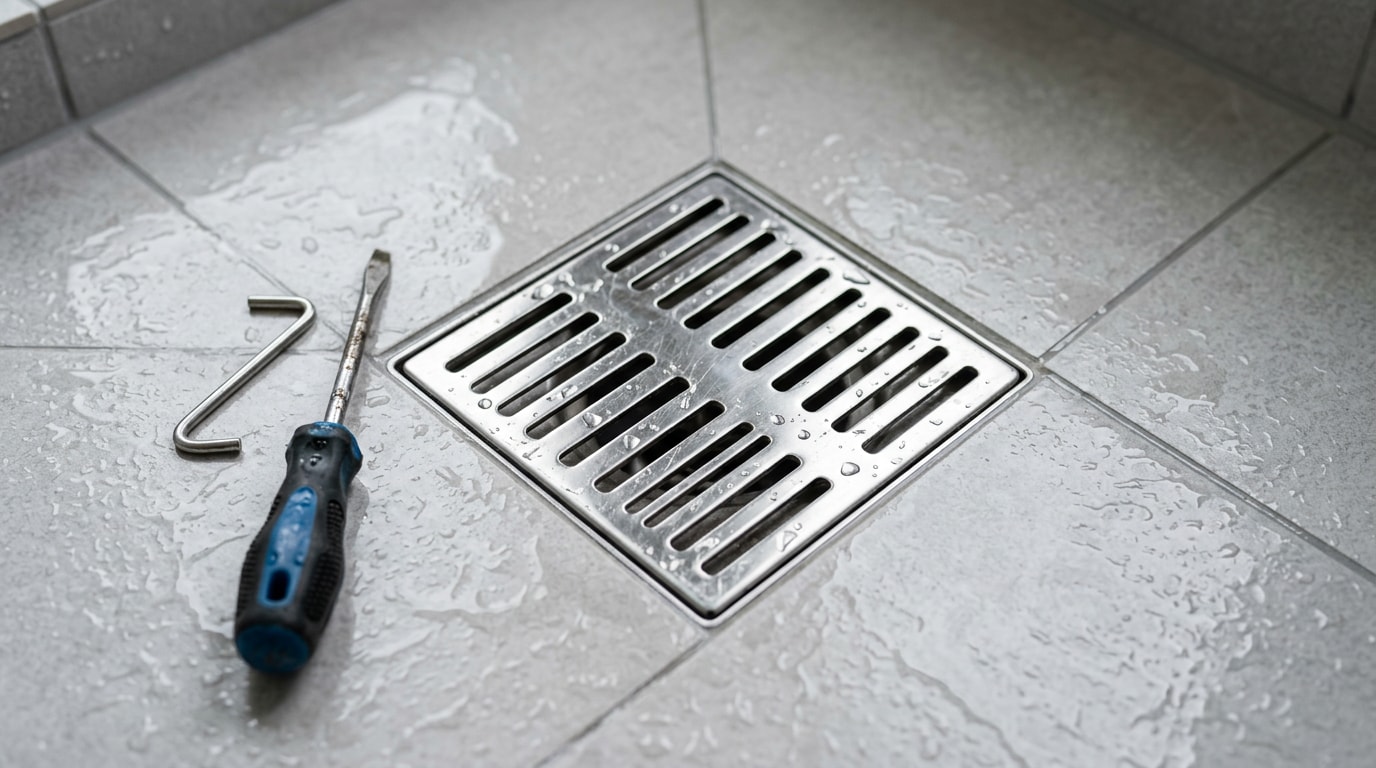
While you're doing bathroom maintenance, it's a good time to check the shower side too. Our guide on how to remove a shower drain covers every cover type step by step.
When to Call a Plumber
Stop troubleshooting and pick up the phone if you see any of these:
- Sewage backing up into a tub or shower
- Multiple drains gurgling at once
- The same toilet clogging repeatedly
- A known foreign object in the trap
- Anything that requires roof or sewer-line access
A licensed plumber brings tools you can't meaningfully rent: camera inspection to see the actual blockage, motorized augers sized for a main line, and hydro-jetting that scours pipe walls rather than punching a hole through the clog.
If you'd rather not guess, the team at Aumenta Plumbing handles diagnosis and repair, and our full range of plumbing services covers everything from a $12 flapper to a dug-up lateral. We work throughout the area, including Westfield and Mountainside. Get a free estimate and we'll tell you what it actually needs.
Frequently Asked Questions
Why does my toilet flush sometimes but not always?
Intermittent flushing usually means the tank water level varies between cycles, the flapper isn't seating the same way every time, or a partial blockage is sitting in the drain. Run the food coloring test first, then verify the fill line. If both check out, suspect the drain.
How do I know if it's the flapper or a clog?
A clog keeps water from leaving the bowl, so the bowl fills high and drains slowly. A bad flapper lets the tank leak down, so the bowl empties but weakly and never fully clears. The bucket test at the top of this article settles it in under a minute.
Why doesn't my toilet bowl fill back up after flushing?
Check the small refill tube that runs from the fill valve into the overflow tube. If it's fallen out, kinked, or clogged, the bowl won't get its post-flush charge of water. Reseat it about a quarter inch above the top of the overflow tube and adjust the fill valve if needed.
How do I know if my toilet flapper needs replacing?
Pull it up and look. A flapper that's visibly warped, brittle instead of pliable, crusted with mineral scale, or no longer sitting flat over the valve opening is done. In hard water, expect roughly four to five years of service.
What does it mean when my toilet gurgles after flushing?
Gurgling is trapped air escaping through the water in the trap, which points to a venting problem or a partial main-line blockage rather than a clog inside the toilet. If other fixtures gurgle too, treat it as a sewer line issue and call a professional.
How do you flush a toilet manually?
Pour one to two gallons of water into the bowl from about waist height, slowly at first, then fast, to force the siphon. Older high-volume toilets may need more. You can also fill the tank to the fill line and flush normally, which works even with the supply valve off. Skip this if the line is actually clogged or you'll overflow the bowl.
Will a clogged toilet eventually unclog itself?
Sometimes. Paper and organic waste can soften and break apart overnight, which is why a light clog often clears by morning. Wipes, plastic, and hard objects will not break down, and waiting just lets them pack in tighter.
Can I pour chemical drain cleaner into a toilet?
We don't recommend it. Caustic cleaners often stall in the trap instead of reaching the clog, they can damage older pipes and tank components, and they make the job hazardous for whoever opens the fixture next. A flange plunger or closet auger is safer and usually faster.
Reviewed by the licensed plumbing team at Aumenta Plumbing, a New Jersey plumbing, heating, and bathroom remodeling contractor. Questions about your own toilet? Contact us and a licensed tech will walk you through it.