I'll research the SERP landscape before revising. Now let me verify authoritative external sources for gas connections and sealant guidance. Let me confirm a third authoritative source for thread sealant guidance.
FIP in plumbing stands for female iron pipe: a fitting with the threads cut on the inside, made to receive a male-threaded part. Get the gender wrong at the counter and the joint either refuses to start or sprays the second you open the valve. Here is how to spot, size, and seal one on the first try.
What Does FIP Mean in Plumbing?
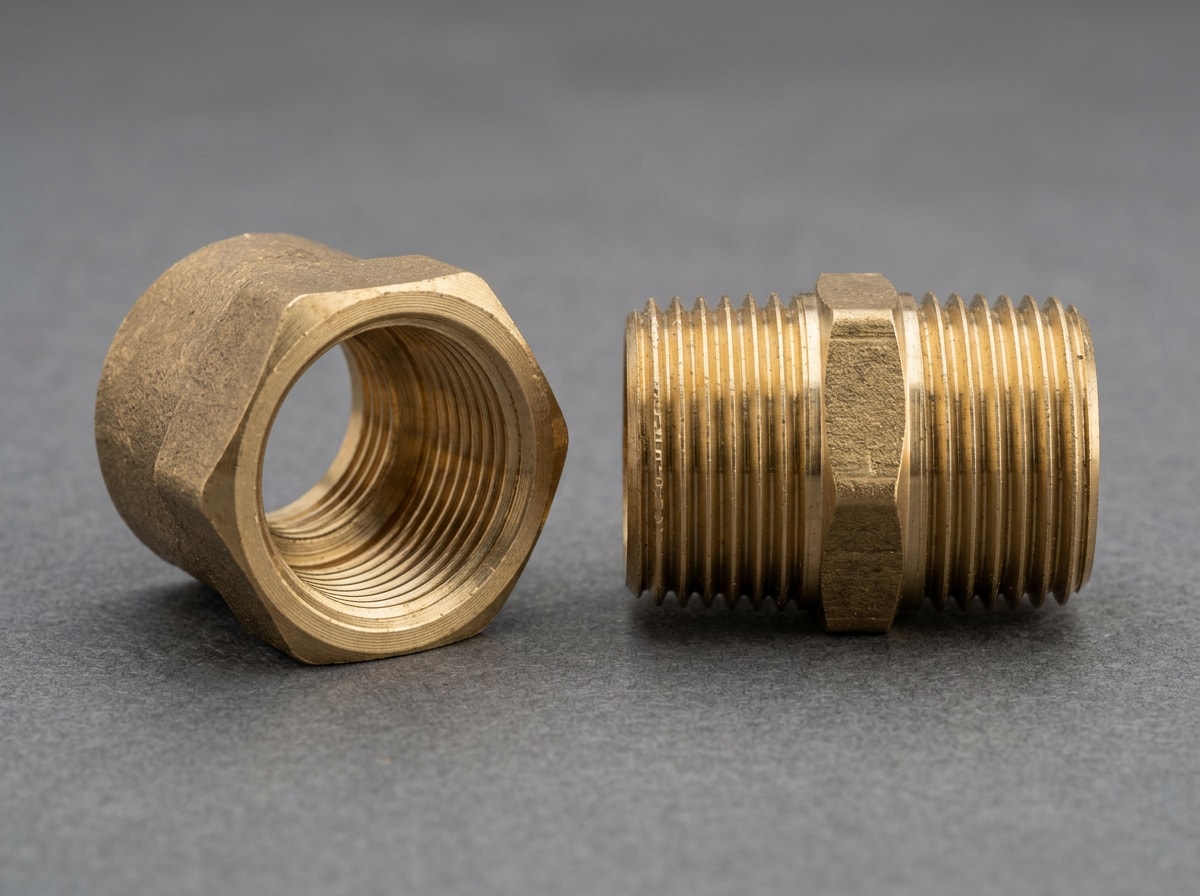
FIP means female iron pipe. The threads live inside the opening, and a male fitting screws into them. FIP stands for female iron pipe, a fitting characterized by inside threading and sometimes referred to as FPT (female pipe thread) because it can be made from materials other than iron.
The shortcut for the aisle: if you can see threads down inside the opening, it is female. If the threads are on the outside, it is male.
That single check prevents most wrong-part returns on small repairs like a leaking supply stop.
What Are Pipe Threads?
Pipe threads are the spiral ridges machined onto a pipe end so two parts can screw together and hold pressure.
Three features matter:
- Crest: the peak of the ridge.
- Root: the valley between ridges.
- Flank: the angled wall connecting the two.
Threads have peaks and valleys called crests and roots and an area in between the two called a flank.
Those surfaces have to nest. When the crest of one part does not seat into the root of the other, the flanks never make full contact, and you get a leak path that no amount of tightening will close.
Common Materials Used for FIP Fittings
Despite the "iron" in the name, most FIP fittings sold today contain no iron. That mismatch is exactly why the material-neutral label FPT exists.
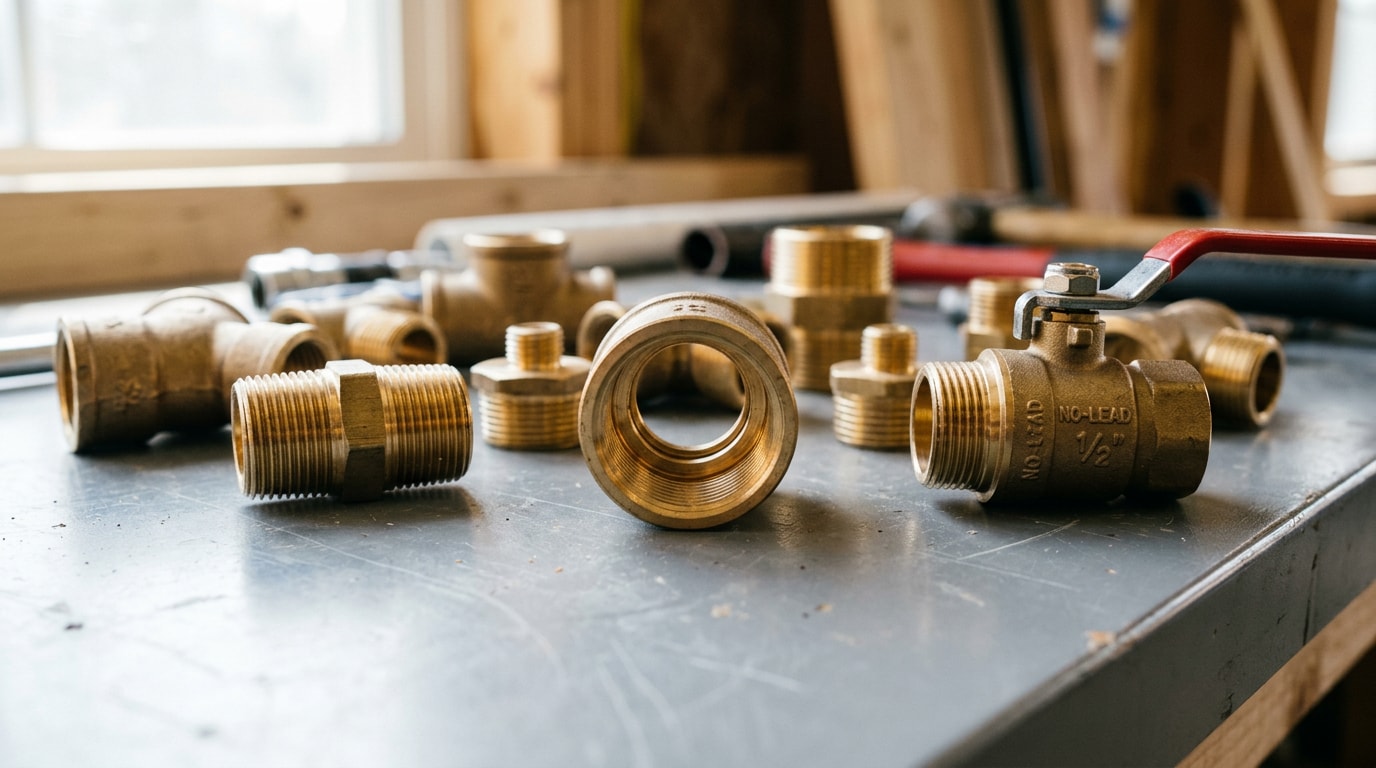
- Brass: supply stops, faucet bodies, hose bibbs.
- PVC and CPVC: irrigation manifolds, pool equipment, some drain assemblies.
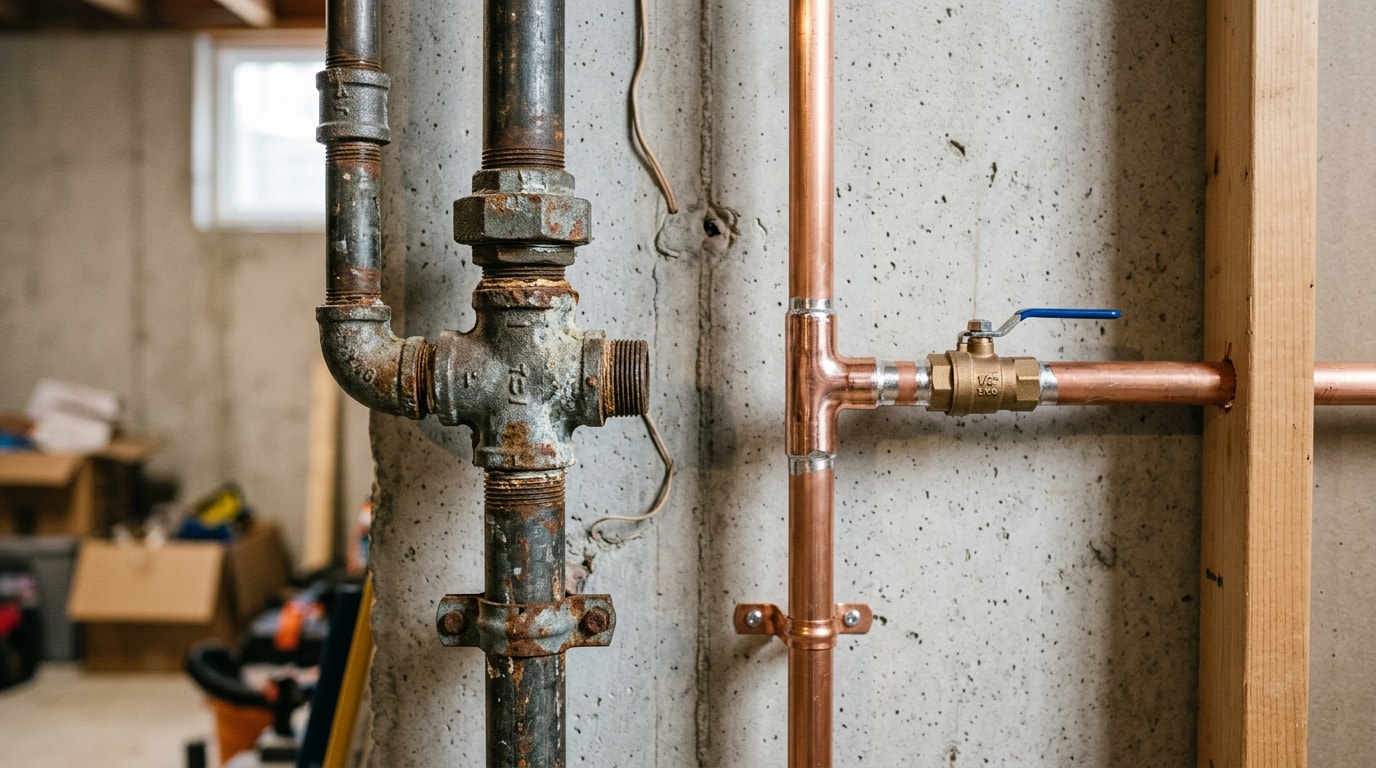
- Galvanized steel: older water and gas runs, common in homes built before the 1970s.
- Stainless steel: corrosive or high-heat service.
- Copper adapters: bridging sweated lines to threaded ones.
FIP vs MIP: What's the Difference?
FIP threads are internal and receive. MIP threads are external and insert. That is the entire distinction.
MIP stands for male iron pipe, and it is also sold as MPT (male pipe thread). FIPs are designed to attach to fittings with outside threading, like MIPs, and like FIPs, MIPs are sometimes called MPTs because they are not made exclusively from iron.
Think of a nut and a bolt. The female fitting is the nut, the MIP end is the bolt, and one of each makes a joint.
Two FIP ends will not connect without a nipple between them. Two MIP ends need a coupling.
Never force a mismatch. Threading a male end into the wrong pitch or diameter cross-threads the joint, strips the softer material, and can crack a brass or plastic fitting outright.
Our rule on the truck: if it does not turn easily by hand for the first two or three rotations, back it out and check the part.
FIP vs NPT: Understanding the Relationship
This is where most shoppers get tangled. NPT and FIP are not competing choices.
NPT (national pipe thread) is a thread standard. It defines diameter, thread count, a 60 degree thread angle, and the slight taper that wedges the joint tight.
FIP describes the thread's gender. Most FIP fittings are cut to NPT, so one part is usually both.
The dimensional spec behind all of it is published by ASME. ASME B1.20.1, Pipe Threads, General Purpose, Inch, covers dimensions and gaging of the most common pipe threads: NPT, NPSC, NPTR, NPSM, and NPSL , and you can review the scope on the ASME standard page.
One caveat worth knowing before you buy: FIP thread is often NPT-compatible, but compatibility does not always guarantee a leak-proof connection, because variations in thread pitch or fitting quality can still cause issues.
| FIP | MIP | NPT | FPT / MPT | |
|---|---|---|---|---|
| What it describes | Fitting gender | Fitting gender | Thread standard | Fitting gender |
| Thread location | Internal | External | Either | Internal / external |
| Tapered or straight | Usually tapered | Usually tapered | Tapered | Usually tapered |
| Governing standard | ASME B1.20.1 | ASME B1.20.1 | ASME B1.20.1 | ASME B1.20.1 |
| Common package labels | FIP, FPT, NPT-F | MIP, MPT, NPT-M | NPT, NPTF | FPT, MPT |
| Mates with | MIP / MPT | FIP / FPT | Matching gender | Opposite gender |
FIP Sizes and How to Measure Them
Nominal pipe size trips up nearly everyone. The number on the package is a trade name, not a measurement.
A 1/2" FIP fitting does not measure 0.500" anywhere on it. Nominal pipe size describes a pipe by name only; it is essentially a reference size and does not translate to an exact diameter measurement on pipe 12 inches and smaller.
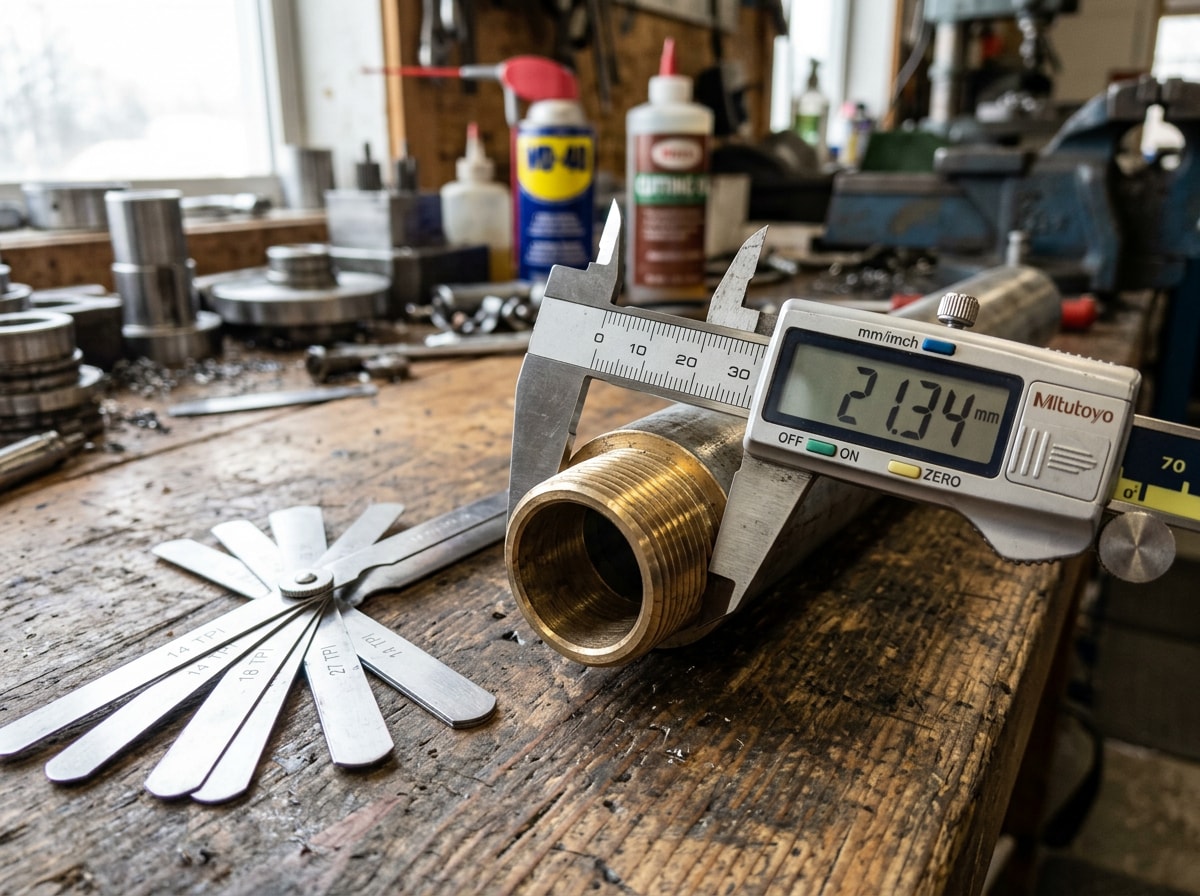
Here is the field trick most guides skip: do not measure inside the female fitting. Threads, taper, and chamfer make that number unreliable with a tape measure. Measure the outside diameter of the male part that goes into it, then match it to the chart below.
| Nominal size | Threads per inch (NPT) | Male thread OD, approx. |
|---|---|---|
| 1/8" | 27 | 0.405" |
| 1/4" | 18 | 0.540" |
| 3/8" | 18 | 0.675" |
| 1/2" | 14 | 0.840" |
| 3/4" | 14 | 1.050" |
| 1" | 11.5 | 1.315" |
Steps that work at the counter:
- Put calipers across the crests of the male threads, near the large end.
- Count threads per inch with a pitch gauge, or count ridges across one inch.
- Match both numbers to the chart. Two matching figures confirm the size; one does not.
In most homes, 1/2" and 3/4" cover nearly every threaded connection you will touch.
Where FIP Fittings Are Commonly Used
Once you know the pattern, female threads turn up all over the house:
- Shutoff valves under sinks and toilets
- Faucet and shower valve bodies, including faucet replacements
- Couplings, unions, and nipples in threaded runs
- Tank inlets and outlets on well systems and expansion tanks
- Water heater connection points, which are classic FIP ports
- Hose bibbs, where the outdoor spigot threads into the stub-out
- Toilet supply connections at the stop valve
Appliance gas supply is the other big category. Dryers, ranges, and gas water heaters all land on a threaded connection, and sizing is a safety issue rather than a convenience one.
The risk is documented. The Consumer Product Safety Commission has warned that older corrugated metal tubes used to connect home appliances to gas supply pipes can corrode and lead to a fire or explosion, specifically older uncoated brass connectors , and its guidance on flexible gas connectors is blunt: the connector should be inspected only by a professional service provider.
If a gas fitting does not thread cleanly, stop and get a free estimate instead of forcing it.
How to Seal FIP Connections Properly
Tapered threads seal by wedging. As you tighten, the male taper compresses against the female taper until metal binds on metal. Sealant fills the microscopic machining gaps that remain.
A few rules that hold up in the field:
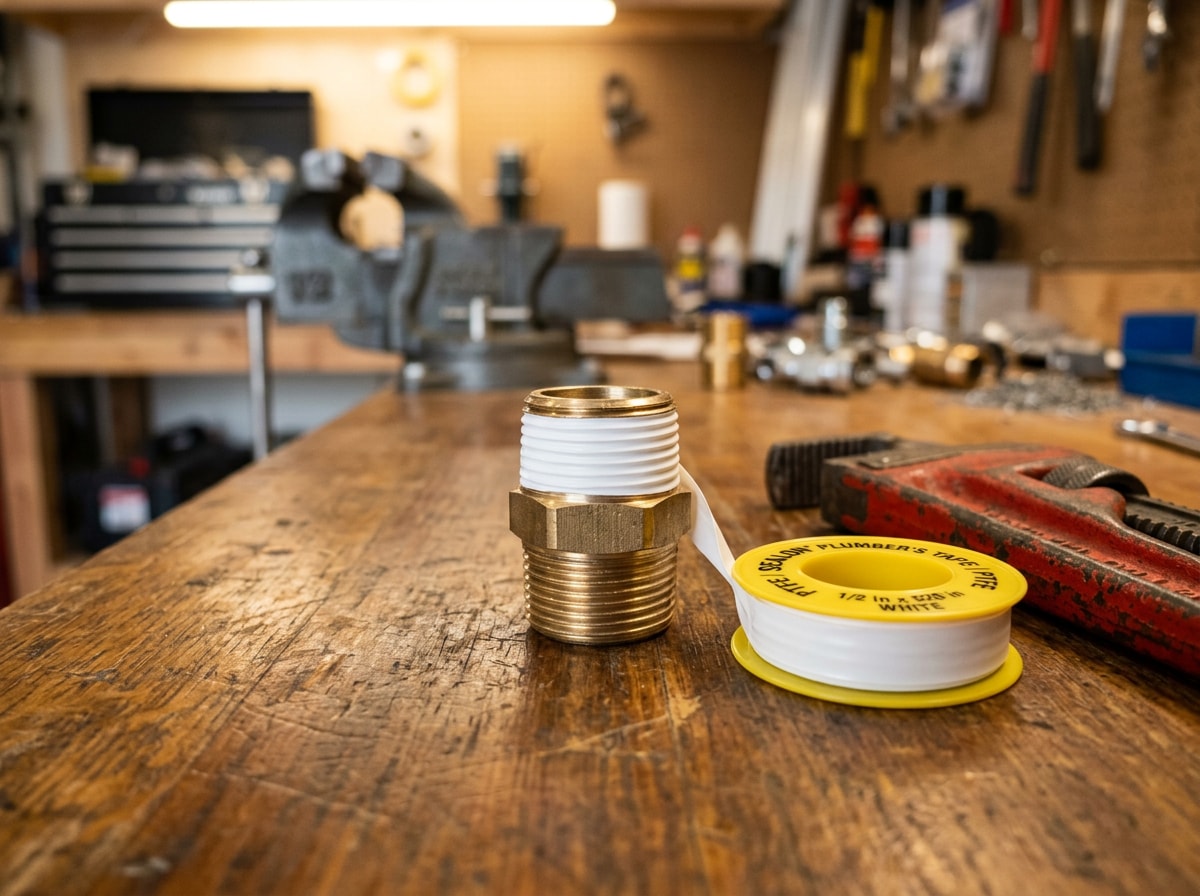
- Sealant goes on the male threads, never inside the female fitting.
- Wrap PTFE tape in the direction of tightening, with the open end of the fitting facing you.
- Pipe dope works equally well and stays flexible, which helps on joints you may need to break later.
- Fittings with an integral washer or O-ring need no sealant at all. Tape there can actually cause a leak.
Manufacturer guidance backs the direction rule. Oatey's thread sealant tape guide notes that yellow thread sealant tape is required by most municipalities when assembling a gas piping system , so grabbing the white roll for a gas line can fail inspection even if it holds.
Two cautions:
- Overtightening cracks fittings and strips threads instead of adding security. Hand tight plus a couple of wrench turns is the usual target on small brass.
- Gas-rated products differ from potable-water products. Check the label before it goes on the threads.
A weeping thread you keep retightening is the start of a bigger problem. Slow drips behind a wall are how pipe replacement jobs begin.
Other Common Plumbing Abbreviations
A few more abbreviations share the same shelf:
- FGH / MGH: female and male garden hose.
FGH stands for female garden hose, and this fitting has threading on the inside, much like FIPs. Garden hose thread is a separate standard, so it will not mate with NPT no matter how close the diameter looks.
- FPT / MPT: the material-neutral twins of FIP and MIP, used when the fitting clearly is not iron.
- Compression: skips threads as the sealing surface entirely. A nut squeezes a brass ring against a seat to grip the tubing, which is why it shows up where dissimilar materials meet under a sink.
- NPT-F / female NPT: catalog synonyms for FIP.
If the alphabet soup is new to you, our plain-English guide to female threads walks through the same terms with more examples.
When to Call a Plumber
Threaded repairs look simple until the fitting will not come apart. Galvanized pipe seizes, brass stops snap at the stem, and a stuck nipple can take the wall pipe with it.
We see this constantly on older homes across our New Jersey service area, where 3/4" galvanized branches still feed modern fixtures through a brass adapter.
Call a pro when:
- The connection is gas, in any form.
- The existing fitting will not break loose with reasonable force.
- You have retaped the same joint twice and it still weeps.
- The threads inside the female fitting look rounded, flattened, or packed with old dope.
Our licensed team handles threaded repairs and full repipes across New Jersey. Start at our homepage or request a free estimate and we will size the fitting for you.
FAQ
Is FIP the same as NPT?
No. NPT is the thread standard that defines dimensions, taper, and angle. FIP names the thread gender, female. Most FIP fittings are cut with NPT threads, so a single part is commonly both.
What is the difference between FIP and MIP?
FIP has internal threads and receives the other fitting. MIP has external threads and inserts into it. One of each makes a joint.
Does FIP mean female?
Yes. FIP means female iron pipe, and the threads are on the inside. The "iron" part is historical, which is why FPT is used interchangeably on brass, PVC, and stainless fittings.
Is FIP the same as FPT?
For practical shopping purposes, yes. FPT stands for female pipe thread and is the material-neutral label for the same internal tapered thread. Check the nominal size and thread count rather than trusting the letters alone.
What does 1/2 inch FIP mean?
It means a female-threaded fitting in the 1/2 inch nominal trade size. Nothing on the part measures 0.500 inches. The male thread that fits it measures roughly 0.840 inches across the crests at 14 threads per inch.
Do you need Teflon tape on FIP threads?
Sealant goes on the male threads entering the fitting, not inside the female fitting. Skip tape entirely where an integral washer or O-ring does the sealing, since tape can hold the washer off its seat and cause a leak.
Can an FIP fitting connect to a garden hose?
Not directly. Garden hose thread is a different standard with a coarser pitch, so you need an FGH-to-FIP or MGH-to-MIP adapter. Forcing the two together strips the softer brass.
How tight should an FIP connection be?
Hand tight, then a short additional turn or two with a wrench on small brass. Tapered threads seal on the wedge, not on brute force, and extra torque splits fittings more often than it stops drips.
Does a leaking threaded joint waste much water?
More than people expect. EPA's Fix a Leak Week program notes that household leaks can waste nearly 1 trillion gallons of water annually nationwide. A weeping thread under a sink belongs on the fix list, not the watch list.