I'll research the SERP landscape before revising.
PEX plumbing is flexible cross-linked polyethylene tubing that carries hot and cold water through most homes built or repiped in the last two decades. It costs less than copper, installs without a torch, and snakes through finished walls without demolition. It also has three grades, a serious UV weakness, and a print line on the pipe that almost no homeowner knows how to read.
What Is PEX Plumbing?
PEX plumbing is a water supply system built from cross-linked polyethylene tubing, a flexible plastic pipe that delivers pressurized hot and cold potable water to fixtures.
The material is high-density polyethylene whose polymer chains have been permanently linked together. That chemical or physical modification of the molecular structure is what turns ordinary polyethylene into a high-performing pipe suitable for potable and non-potable plumbing applications.
Crosslinking technology was first developed in Europe in the late 1960s, and PEX now has a 50-year record of performance worldwide.
It arrived in the United States in the 1980s and is now used in over 60 percent of new construction residential water systems.
One clarification saves a lot of confusion. PEX is a supply pipe only. It is not used for drain, waste, or vent lines, which stay PVC or ABS.
If you are sorting out how the whole system fits together, our simple guide to home water systems covers supply and drainage side by side, and our plumbing services page shows where each material gets used in practice.
PEX-A vs PEX-B vs PEX-C: The Three Types
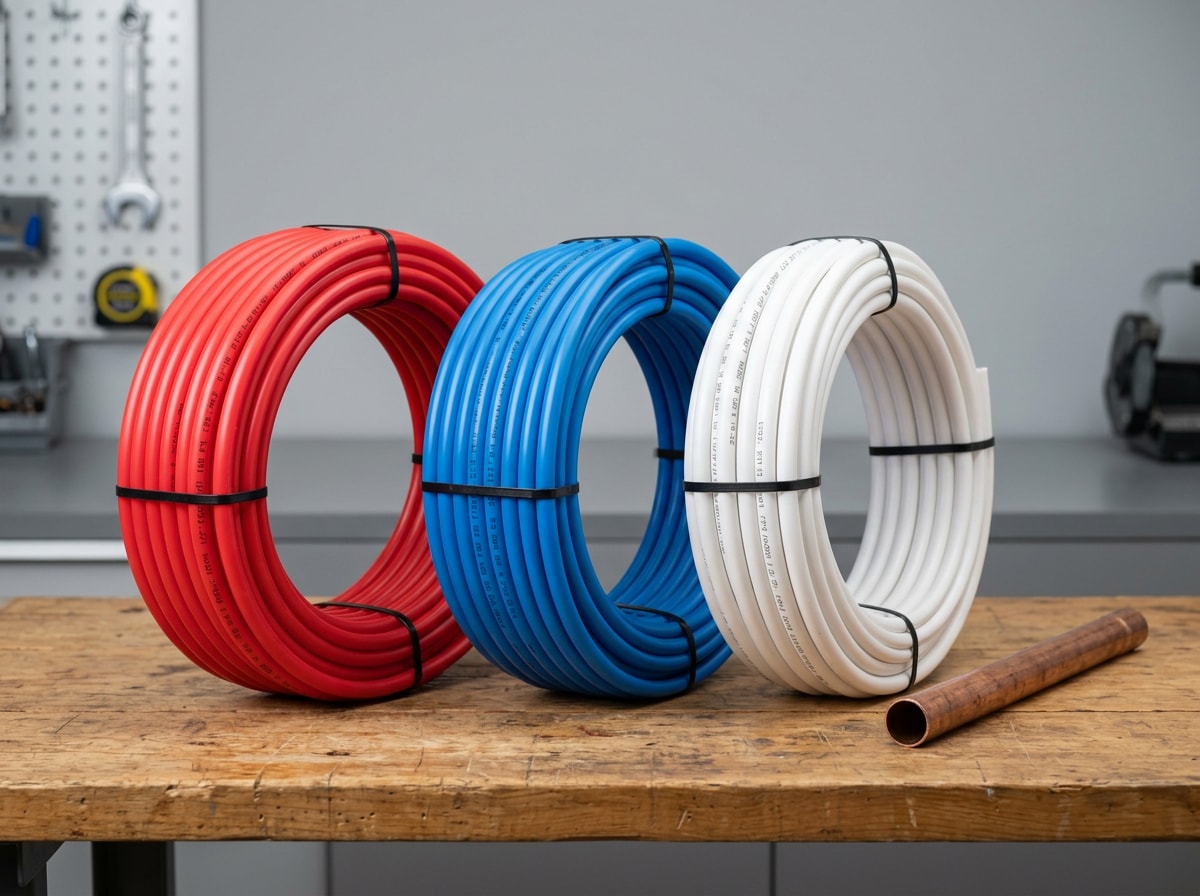
Here is the part most guides get wrong. The letter after PEX signifies the manufacturing method used to cross-link the polyethylene, not the grade of the pipe.
Plumbing codes reference PEX, not the letters, because all PEX must meet the same performance standards.
All three are manufactured and marked to ASTM F876, the standard specification for crosslinked polyethylene tubing. That standard sets test methods for burst pressure, environmental stress cracking, oxidative stability in potable chlorinated water, UV resistance, degree of crosslinking, and the markings printed on the tubing itself.
PEX-A
PEX-A is produced using the peroxide, or Engel, method, named after inventor Thomas Engel. Cross-linking happens while the polymer is still molten.
The result is the highest degree of cross-linking, no coil memory, kinks that can be repaired with a heat gun, and the highest price of the three.
PEX-A is usually joined with expansion fittings. The tubing is stretched over a barb and shrinks back to seal.
PEX-B
PEX-B is produced using the silane or moisture-cure method, with cross-linking developing during and after extrusion. It is the grade most installers actually run.
It carries the highest bursting pressure, the lowest price of the three, more stiffness than PEX-A, noticeable coil memory, and kinks that can only be repaired by splicing in a coupling.
The stiffness barely matters at 1/2 inch, but 1-inch PEX-B can be noticeably harder to bend. Joints are made with copper crimp rings or stainless cinch clamps, and those tools are cheap.
Worth flagging: manufacturers disagree on cold-weather burst behavior. Some claim PEX-A resists bursting better in extreme cold because it expands more , while published comparison data credits PEX-B with the higher bursting pressure and PEX-A with the lower one . Read the tested rating on the pipe rather than the marketing.
PEX-C
PEX-C is cross-linked by electron beam irradiation after extrusion. It is more environmentally friendly to manufacture and has little or no coil memory, but it is prone to cracking, has the least uniform cross-linking, and offers the least resistance to kinks.
It shows up in short runs and some radiant heating work. For a whole-house supply system, it is not the grade to specify.
The four-digit code that actually matters
Skip the letter and read the print line. Under ASTM F876, every PEX product carries a four-digit designation code covering chlorine resistance, UV resistance, and pressure rating, with PEX 5306 representing the top chlorine and UV classes. Because that number reflects tested performance rather than the manufacturing letter, it is a sounder basis for selection than A, B, or C.
If you live somewhere with heavily chlorinated or chloraminated municipal water, that first digit tells you more than any brand claim.
Pros and Cons of PEX Plumbing
Advantages
- Cost.
PEX costs less than half the price of copper, installs much faster, and makes remodeling jobs easier because it is flexible.
- No torch. No soldering means no fire watch and no open flame in a joist bay.
- Fewer joints.
PEX bends around obstacles without the connectors, couplings, and elbow joints copper would need, and fewer connections greatly reduce the chance of a leak.
- Freeze tolerance. PEX expands under ice pressure instead of splitting. It is not freeze-proof, and insulation still matters.
- No corrosion or scale. Flow stays steady in hard-water homes.
- Quiet.
Water travels more quietly than it does through metal pipe, and red and blue tubing makes hot and cold runs obvious.
Disadvantages
- UV sensitivity.
Most manufacturers guarantee only one to six months of UV resistance, and prolonged sunlight causes PEX to harden and crack. Do not store coils in the sun.
- Punctures and pests. Drywall screws go through it, and rodents chew it in attics and crawlspaces.
- Tool dependence.
Installing PEX without the correct tools produces poorly sealed connections and greatly increases leak risk.
- Recycling.
PEX cannot be recycled through normal streams because it does not melt like recyclable plastics.
- Local code limits.
Some jurisdictions still restrict certain PEX uses, so confirm with a licensed plumber before buying.
On safety: potable-rated PEX is third-party certified to NSF/ANSI/CAN 61 for drinking water health effects, the standard that sets minimum health-effects requirements for contaminants imparted to drinking water by plumbing products . That standard tests for BPA in plastic piping, and manufacturers report it is not detected in their PEX.
PEX vs Copper vs CPVC
| PEX | Copper | CPVC | |
|---|---|---|---|
| Material cost per foot (2026 estimate) | $0.40 to $1.00 | $3.00 to $6.00 | $0.60 to $1.25 |
| Expected service life | 40 to 50+ years | 50 to 70+ years | 40 to 50 years |
| Freeze behavior | Expands, usually survives | Splits | Cracks |
| Corrosion and scale resistance | Excellent | Good, pits in acidic water | Excellent |
| Install method | Crimp, cinch, or expansion tool | Soldering skill required | Solvent cement |
| UV exposure | Poor | Excellent | Poor |
Material prices move with commodity markets, so treat those ranges as a ballpark, not a quote. The bigger gap is labor, since copper takes noticeably more install hours on a comparable repipe.
By use case:
- Remodels and fishing through finished walls: PEX, decisively.
It is more flexible and comes in long lengths, so it works better for fishing through walls in remodeling situations.
- New construction: PEX for speed and cost, copper when a spec or buyer expectation demands it.
- Exposed or sun-facing exterior runs: copper. Every guide that writes copper off entirely gets this one wrong.
- Hard water or high-chlorine water: PEX or CPVC, since neither pits or scales.
How Much Does a PEX Repipe Cost?
Pricing depends on fixture count, stories, wall access, and how much drywall has to come out. Three cost drivers dominate every quote we write:
- Number of fixtures and branch runs. Each one adds tubing, fittings, and labor hours.
- Access. Open framing during a remodel is cheap. Fishing through finished plaster ceilings is not.
- Transition points. Water heater connections, meter tie-ins, and old galvanized stubs each need adapters.
On most northern and central New Jersey homes we repipe, the PEX material line is a small fraction of the total. Labor and drywall repair carry the bill. That is also why a copper bid on the same house usually lands well above a PEX bid even when copper prices dip.
Want a real number instead of a range? Get a free estimate and we will walk the house first.
PEX Pipe Sizes
Residential PEX runs from 3/8 inch to 1 inch, with 1/2 inch handling most branch work. Tubing is sold by nominal diameter so it lines up with same-size copper on a plan set, but flow is not identical. Insert-style fittings reduce flow and water volume at the joint because of their smaller diameter.
Size follows fixture count, run length, and available pressure:
- 3/8 inch: short fixture drops to a sink or toilet
- 1/2 inch: standard branch lines
- 3/4 inch: trunk lines and manifold feeds
- 1 inch: main distribution on larger homes
Anything borderline should be sized against your local code edition rather than guessed at. The Plastics Pipe Institute's PEX resource library publishes the residential design guide most installers reference.
PEX Fittings, Tools, and Connections
PEX rarely fails mid-run. It fails at joints. That makes the connection system as consequential as the tubing.
Do you need special tools to install PEX?
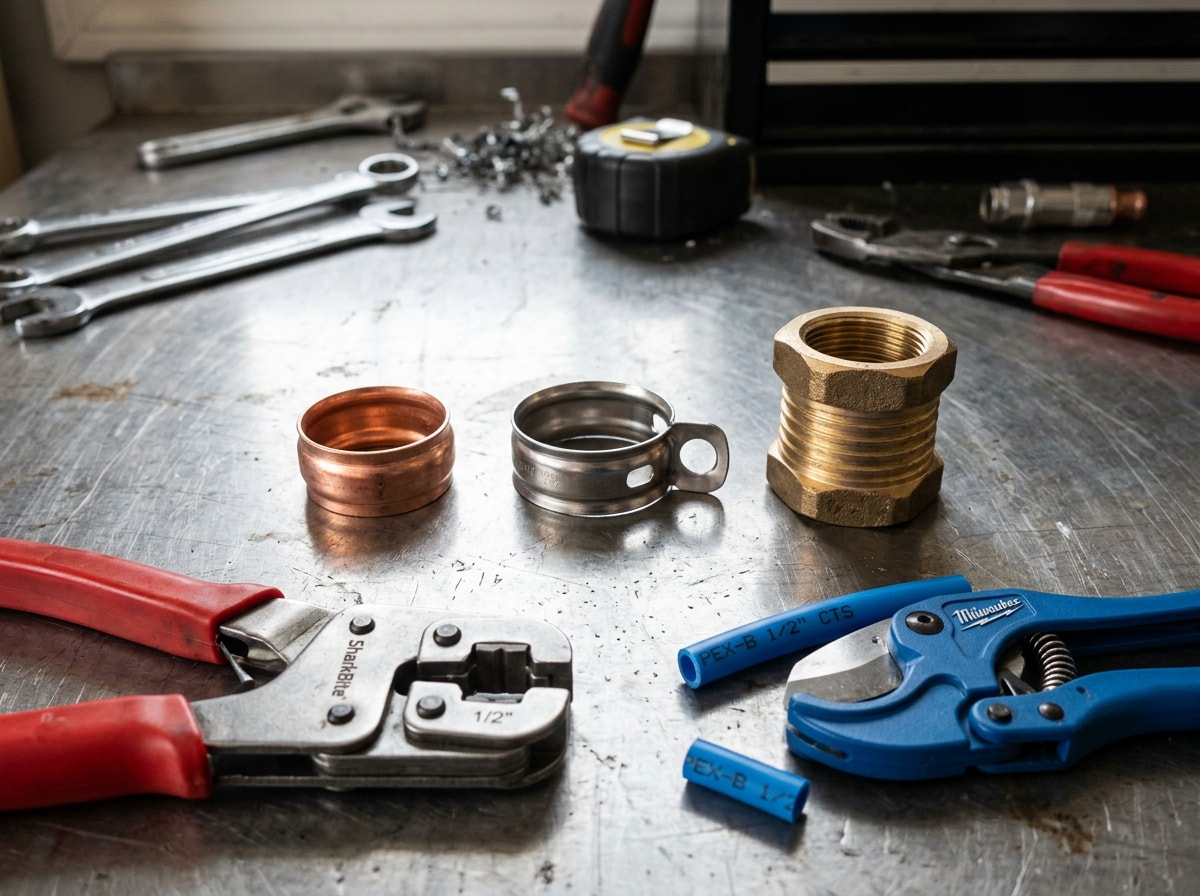
Yes. Connections for most PEX supply jobs require a special tool, and of the several methods available only two are affordable enough to be practical for DIYers: crimp rings and cinch clamps.
- Crimp rings: copper rings compressed with a crimp tool, used with PEX-B and PEX-C
- Cinch clamps: stainless ears closed with a cinch tool, the budget route
- Expansion: PEX-A, using an expansion tool
- Press: professional grade, fastest, highest tool cost
Stab-in and compression fittings need no special tool but are too expensive to be practical on large projects. A dedicated PEX cutter is non-negotiable. A hacksaw leaves a ragged end that will not seal.
Mismatching a tool to a fitting system is a leak waiting to happen, and it will fail inspection. When one does let go behind drywall, that becomes a leak repair call instead of a plumbing job.
How do you connect PEX to existing pipes?
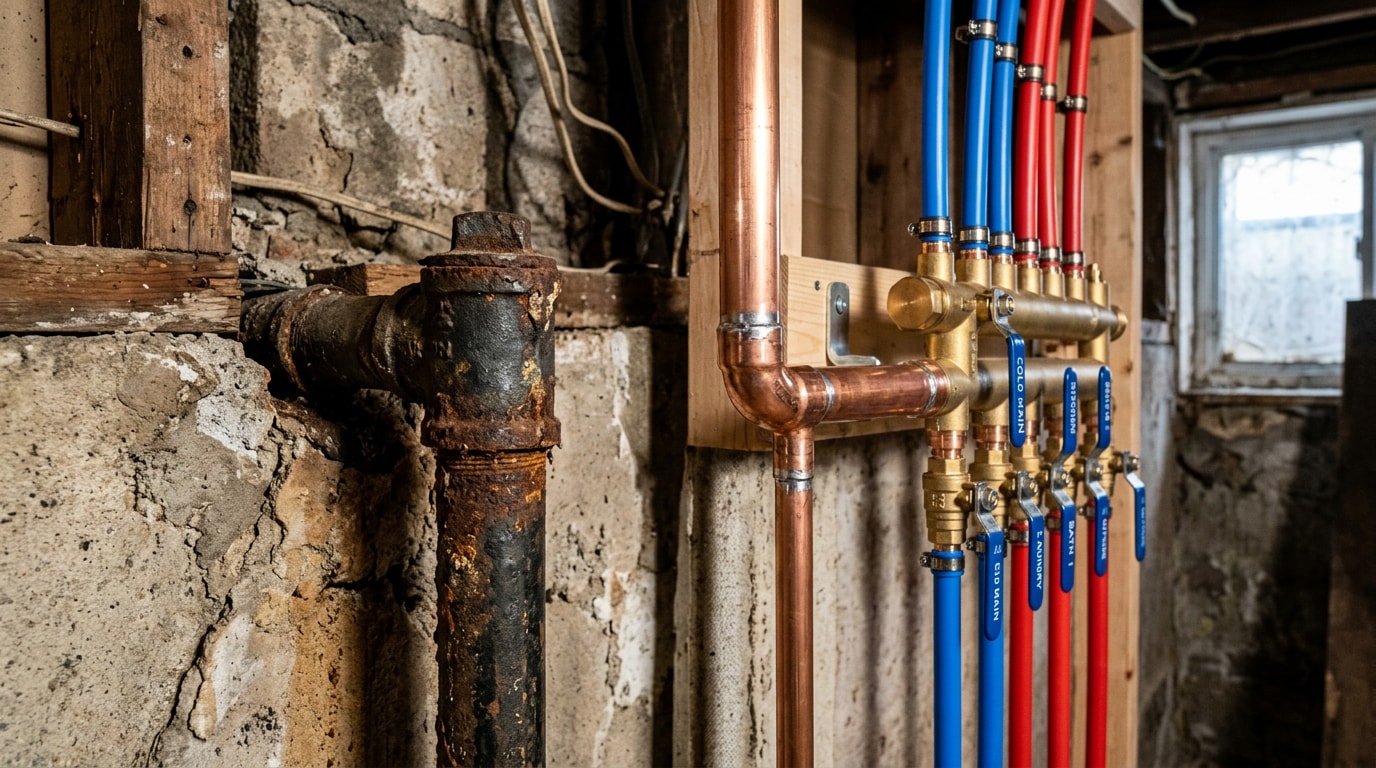
PEX connects to existing copper and galvanized steel supply lines using transition fittings that link the two materials. Threaded and sweat adapters cover most situations.
At the water heater, note the limitation: PEX cannot be connected directly to a water heater and requires an appropriate connector to prevent heat damage. Run rigid pipe off the unit first, then transition a safe distance away. Our water heater installation crews do this on every changeout.
Some jurisdictions also prohibit concealed push-fit connections, so ask your inspector before burying one. Full-house transitions are handled on our pipe repair and replacement page.
Where PEX Belongs, and Where It Does Not
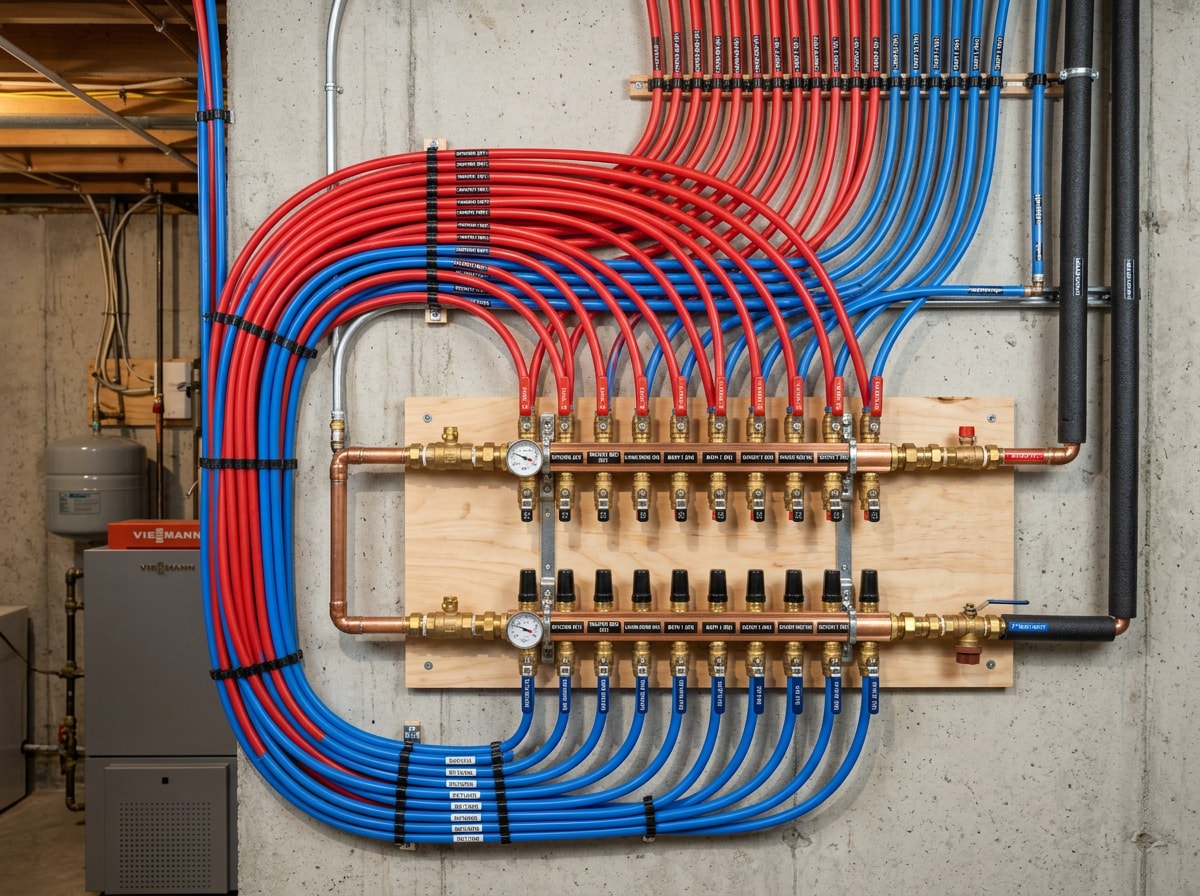
PEX is used for distributing hot and cold water, as municipal water service lines, in hydronic radiant heating systems, and in snow and ice melting systems. Add manifold or home-run systems, where every fixture gets a dedicated line and its own shutoff.
Manifold systems are worth a second look on remodels. Dedicated runs mean no pressure drop when someone starts a shower upstairs.
Where PEX does not belong:
- Sun-exposed exterior runs
- Drain, waste, and vent piping
- Anything above its rated temperature and pressure, which drops as pressure rises
- Direct connection at a water heater outlet
How Long Does PEX Plumbing Last?
Properly installed indoor PEX should last 40 to 50 years or more. Four variables move that number:
- Installation quality. Bad joints, overtightened clamps, and unsupported runs cause most early failures.
- Water quality. Aggressive chlorine or chloramine levels combined with high temperatures accelerate aging.
- Grade and rating. Check the four-digit chlorine and UV code on the print line.
- UV exposure. Even brief sunlight during storage or construction shortens service life.
Manufacturer warranties usually run 10 to 25 years, well short of the expected lifespan, and many are void if the tubing was not installed to spec with matched fittings. Manufacturers also warn that the reliable kink repair is to cut out the damaged section and join it with a fitting, which keeps warranty coverage intact. Keep your documentation.
Homeowners in Westfield and the surrounding towns often ask whether their water chemistry argues for one material over another. It sometimes does, and it is a five-minute conversation, not a sales pitch.
FAQ
Is PEX plumbing safe for drinking water?
Yes, when the tubing is potable-rated and third-party certified. Certification under NSF/ANSI/CAN 61 tests for BPA in plastic piping, and manufacturers confirm both PEX-A and PEX-B are safe for drinking water. A faint plastic taste on new installs is common and clears after flushing the lines.
What are the disadvantages of PEX plumbing?
UV sensitivity, vulnerability to punctures and rodent damage, tool dependence, non-recyclability, and occasional local code restrictions. High chlorine combined with sustained high temperature also shortens service life.
Is PEX better than copper?
It depends where the pipe goes. For interior supply runs, PEX wins on cost, install speed, and freeze tolerance. For exposed exterior runs or anywhere the pipe takes physical abuse, copper is still better.
Can PEX be used outdoors or in direct sunlight?
Not for sustained exposure. UV rays break PEX down, and most manufacturers guarantee only one to six months of UV resistance. Buried PEX is fine, and short exposed sections can be sleeved.
Which PEX type is best for a house?
Most homes are plumbed in PEX-B because it is affordable, widely stocked, and strong. PEX-A is worth the premium for tight routing and kink-prone layouts. Either works when the print line shows a high chlorine and UV rating.
Does PEX reduce water pressure?
The tubing does not, but the fittings can. Insert-style fittings narrow the opening at each joint and reduce flow. Correct sizing and a manifold layout offset most of it.
Can PEX freeze and burst?
It can burst, but it resists better than copper or CPVC. PEX contracts and expands under extreme temperatures, making it less likely to burst as water inside freezes and thaws.
It is also less likely than CPVC to burst if it freezes. Insulate unheated spaces anyway.
Can you mix PEX-A and PEX-B in one system?
Yes, as long as each fitting system is matched to the tubing it is rated for. Problems start when a crimp ring meets an expansion fitting, not when two tubing types share a house.
How do I know what PEX I already have?
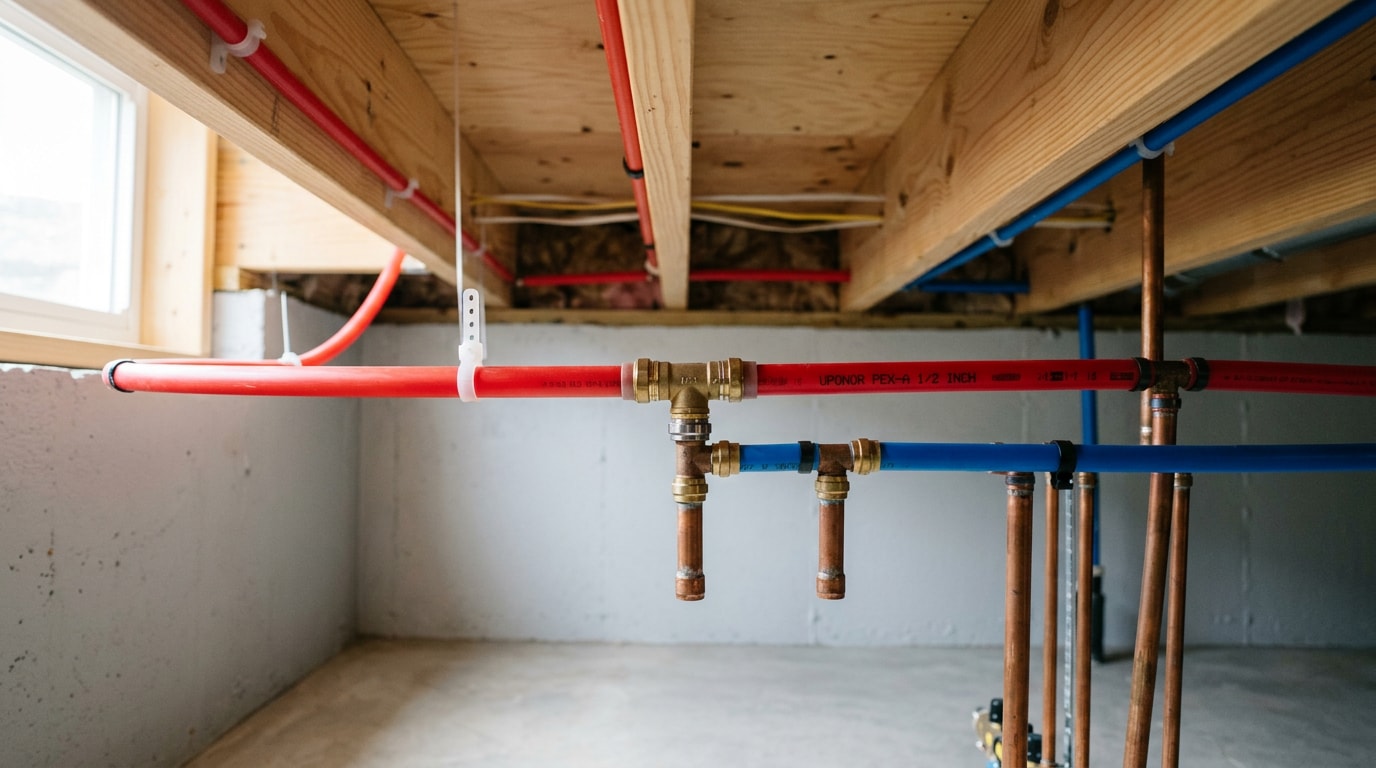
Read the print line on the pipe. It lists the manufacturer, the ASTM standard, the size, the pressure and temperature ratings, and the material designation code.
---
Aumenta Plumbing is a licensed plumbing, heating, and remodeling contractor serving northern and central New Jersey, including Mountainside, Westfield, Morristown, and Jersey City. We repipe older homes in copper, galvanized, and PEX every week, which is why the advice above leans on print lines and fitting compatibility rather than brand loyalty.
Questions about your own supply lines? Visit our home page or contact our team for a free estimate.