Plumbing is the network of pipes, fixtures, valves and appliances that brings clean water into a building and carries used water safely out of it. Most people only think about it on the day something fails, which is usually the most expensive day to start learning. Here is what is happening behind your walls, and how to read the warning signs before a slow drip becomes a flooded floor.
What Is Plumbing?
Plumbing is both a system and a trade.
As a system, it covers everything that moves water through a building: supply lines, drains, vents, valves, fixtures and water heating equipment.
As a trade, it is the skilled work of designing, installing, maintaining and repairing that hardware.
That double meaning trips people up. When a builder says a house "needs plumbing," they mean labor. When an inspector says the plumbing failed, they mean hardware.
The simplest way to picture it is a circulatory system. One set of lines pushes fresh water in under pressure. A second set drains waste away using gravity. The two never touch, and that separation is what keeps drinking water safe.
Every complete plumbing system has three requirements:
- A source of potable water, from a municipal main or a private well
- A protected drainage path for wastewater, to a sewer or septic system
- Fixtures and equipment that let you actually use the water
Miss any one of those and the system is not finished.
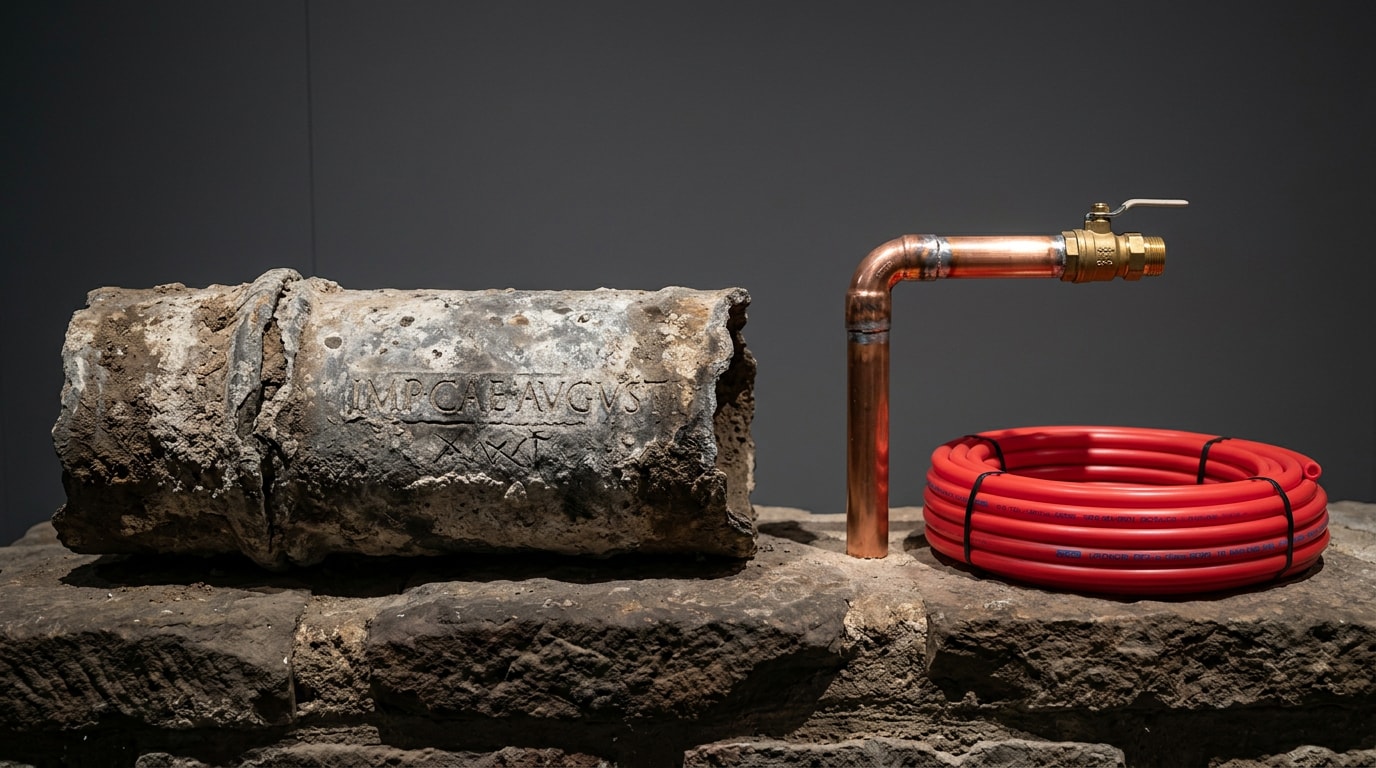
The name is far older than the pipes in your walls. It comes from the Latin plumbum, meaning lead, because Roman water pipes were made of it. If the history interests you, our 5,000-year timeline of indoor plumbing traces how those early systems became modern ones.
How Does Plumbing Work?
Two forces do nearly all the work. Pressure pushes clean water in. Gravity pulls dirty water out. Air venting balances the pressure inside the drain lines so waste keeps moving.
The Water Supply System
Fresh water follows a predictable path.
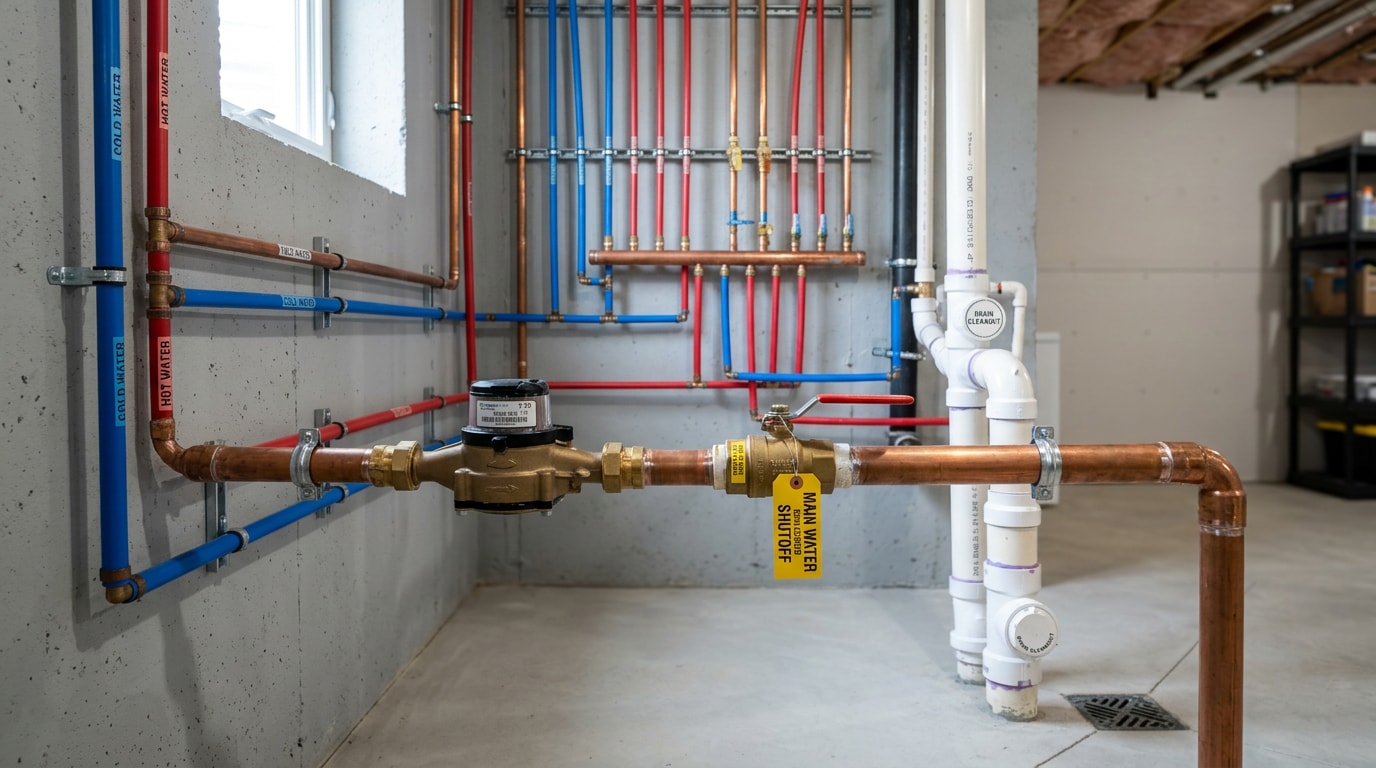
It leaves a municipal main or a well, travels through the service line to your property, passes the water meter, then reaches the main shutoff valve. That valve is the single control that stops every drop entering the building.
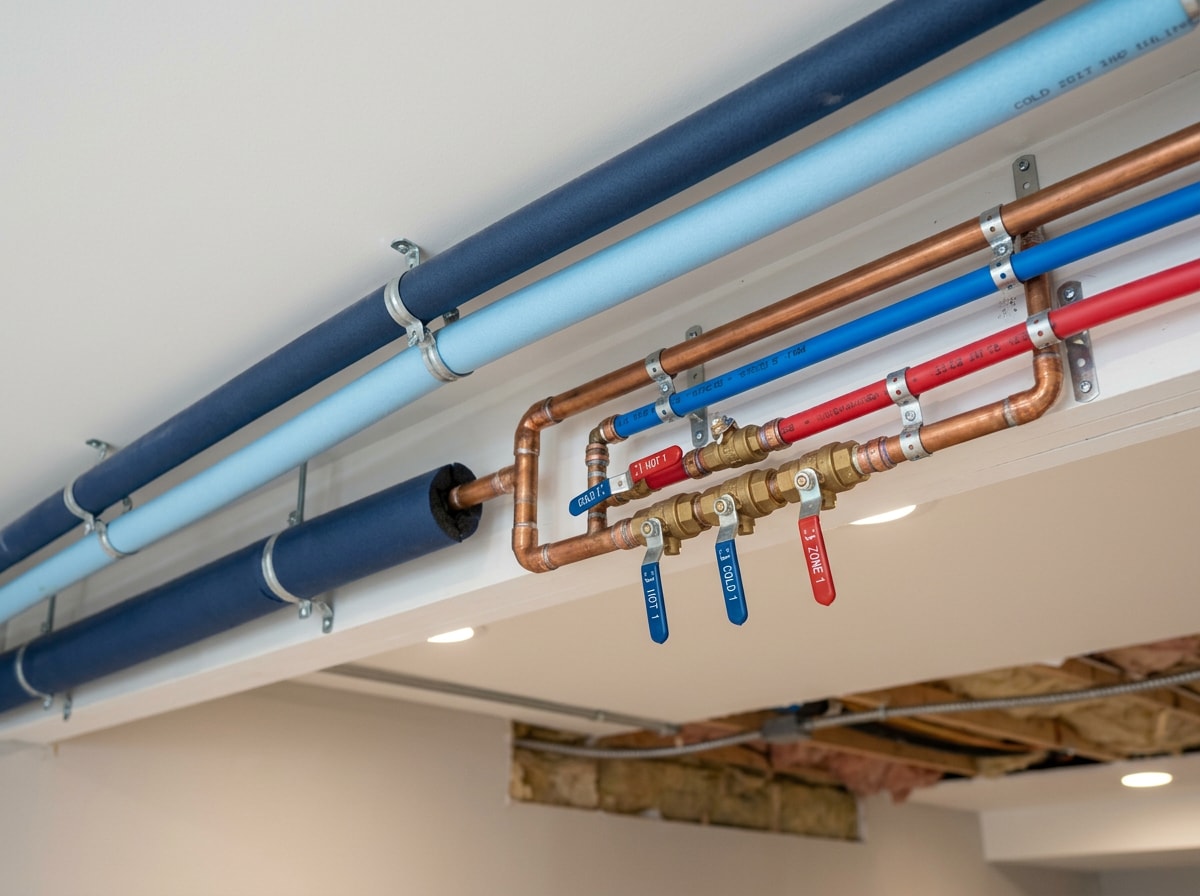
From there the line splits. One branch carries cold water to fixtures. The other feeds the water heater and returns as the hot side. Those hot and cold lines run in parallel to nearly every sink, tub and appliance.
All of it moves under pressure from the street main or a well pump. That pressure is what lifts water two floors to a shower head with no help at all.
Find your main shutoff today, while nothing is wrong. During a burst pipe, thirty seconds of searching is the difference between a wet floor and a ruined ceiling below.
The Drainage System
Waste lines work on the opposite principle. No pressure at all.
Drain pipes are pitched downward, commonly about a quarter inch of fall per foot, so gravity carries wastewater toward the main sewer line or septic tank. That is why the network is called the DWV system: drain, waste and vent.
Every fixture also needs a P-trap, the curved section of pipe under a sink that holds a small pool of water. That water forms a seal and blocks sewer gas from rising into the room. Toilets have a trap built into the porcelain, which is why there is always standing water in the bowl.
Traps are also where hair, grease and soap collect, so they are the usual suspect behind a slow sink. Our drain cleaning service page covers what a professional clearing actually involves, and a repeating backup in more than one fixture usually points further downstream to the sewer line.
How Venting Works
Venting is the most misunderstood part of a plumbing system.
When a toilet flushes, rushing water creates negative pressure behind it. A vent stack running through the roof answers by pulling fresh air into the line, equalizing pressure so waste keeps flowing.
Without that air, suction pulls water out of nearby traps. That is trap siphoning, and once a seal breaks, sewer gas has an open path into living space.
Two symptoms point straight at a venting fault rather than a clog:
- Drains that gurgle after a nearby fixture is used
- A sewer odor that returns no matter how often you clean
This is worth knowing because most homeowners pour drain cleaner at a venting problem for months. Chemicals cannot fix a blocked vent stack.
Types of Plumbing
Systems are usually grouped by where they are installed.
Residential plumbing covers houses and apartments. Modest fixture counts, smaller pipe diameters, and a layout one person can map in an afternoon.
Commercial plumbing serves hotels, restaurants, schools and office buildings. Heavier use, far more fixtures, booster pumps for upper floors and stricter backflow prevention rules make it a different discipline in practice.
Industrial plumbing handles factories and processing plants, where lines may carry chemicals, steam or process water and discharge is regulated well beyond ordinary sanitary waste.
Two more splits are worth knowing. Interior plumbing is everything concealed in walls and floors. Exterior plumbing manages water outside the structure, including irrigation, site drainage and the gutters and downspouts that move rainwater off the roof.
Types of Pipes Used in Plumbing
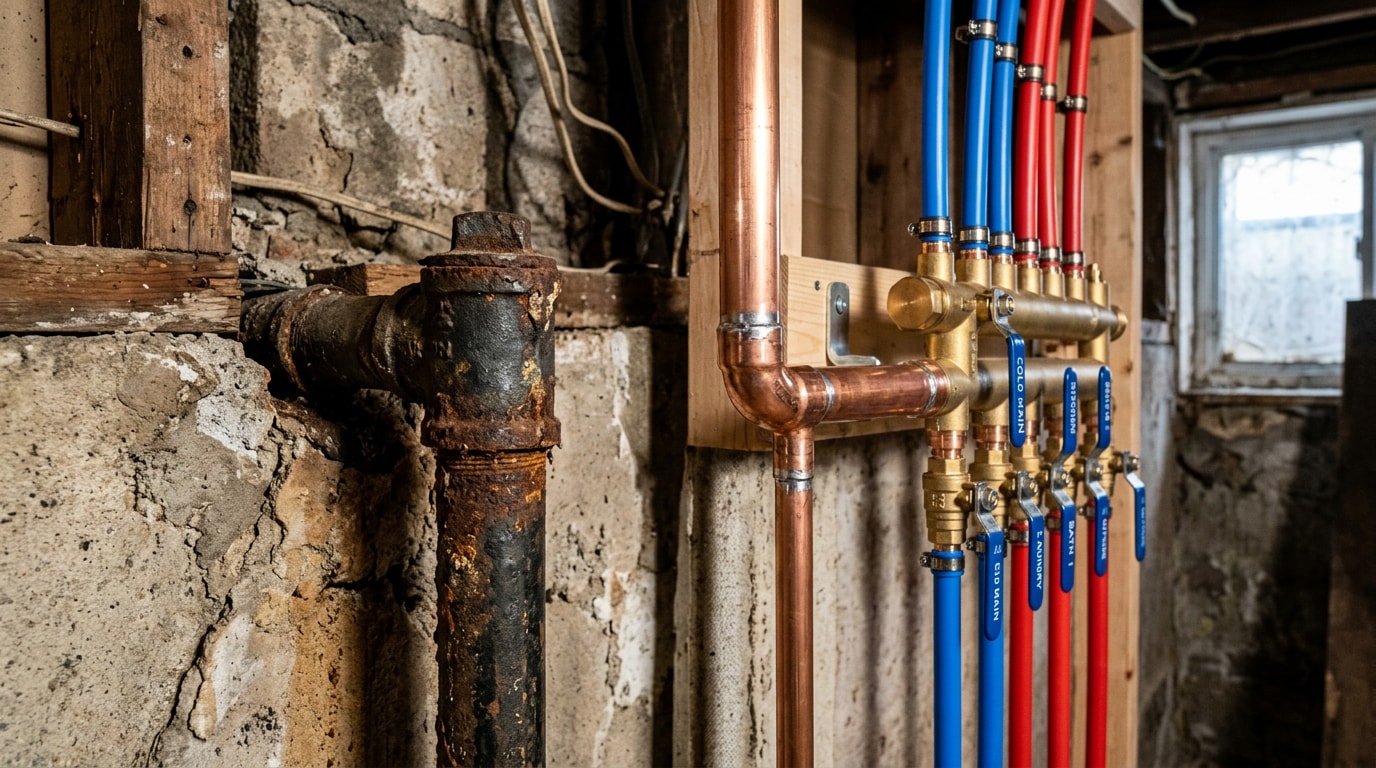
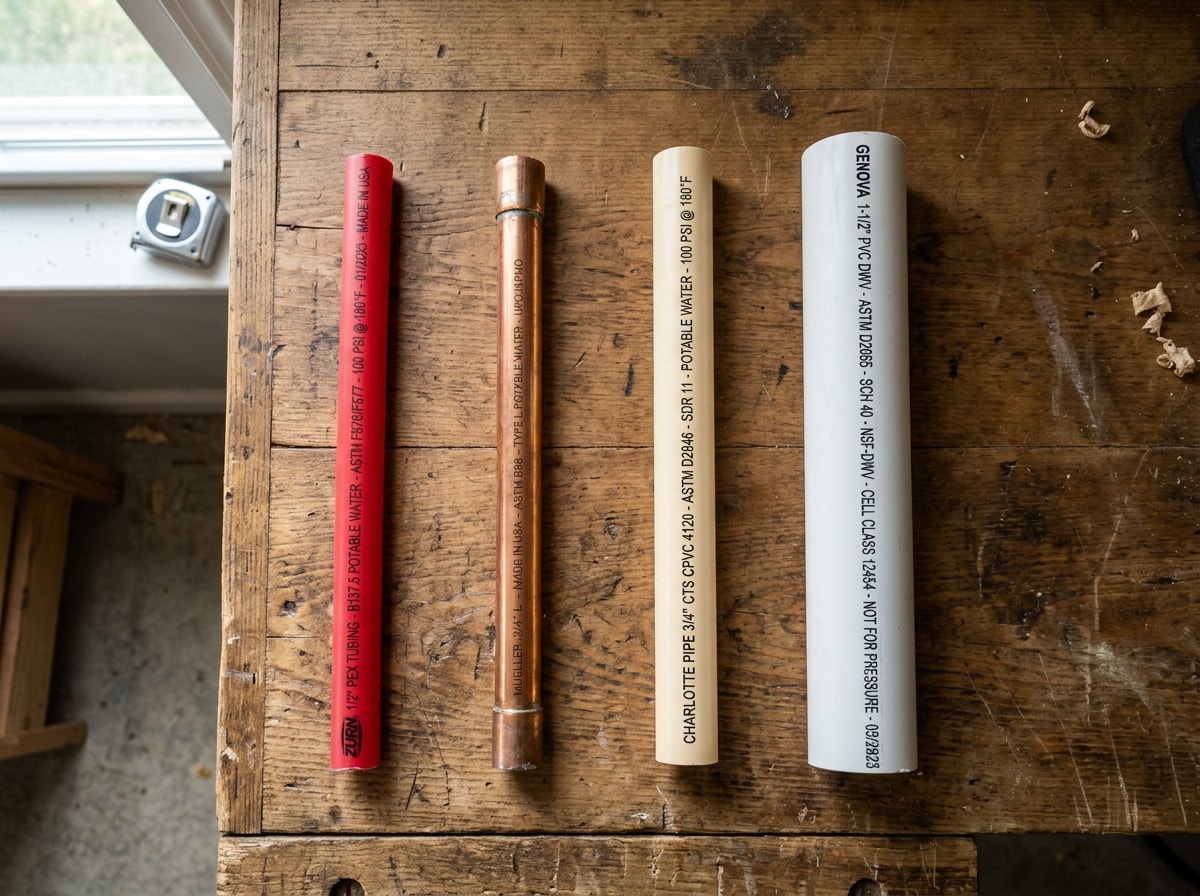
Different materials exist because different jobs demand different properties. PEX and copper dominate supply lines in new work. PVC and ABS handle drainage. Galvanized steel mostly survives as a leftover from earlier decades, often choked with internal rust.
| Material | Typical use | Rough service life | Freeze and corrosion behavior | Usually found in |
|---|---|---|---|---|
| PEX | Supply, hot and cold | 40 to 50 years | Flexible, tolerates freezing better than rigid pipe, degrades in sunlight | Built or repiped since the early 2000s |
| Copper | Supply | 50 years plus | Can split if frozen, may pit in acidic water | 1950s onward |
| CPVC | Supply, hot and cold | 40 to 50 years | Handles hot water, grows brittle with age | 1980s onward |
| PVC and ABS | Drainage only | 50 years plus | Will not corrode, brittle in cold, not for hot supply | Drain lines since the 1970s |
| Galvanized steel | Legacy supply | Often under 50 years | Rusts from the inside, narrowing flow | Pre-1960 homes |
| Cast iron | Legacy drainage | 75 to 100 years | Corrodes and scales slowly, quiet in operation | Pre-1970 homes |
Service life figures are general ranges. Water chemistry, installation quality and working pressure all shift them.
One caveat outranks any material preference: approved pipe materials are set by the code your town has adopted and by the authority having jurisdiction, not by national habit. The International Plumbing Code establishes minimum requirements for plumbing and piping systems to protect health, safety and property, and allows for the acceptance of new products and materials , but adoption varies by state and municipality. Check the current plumbing code text at ICC Digital Codes and confirm locally before planning a repipe or pipe replacement.
In practice this catches homeowners out. A material a neighbor two towns over used legally may not be approved by your inspector, and New Jersey enforces its plumbing subcode through the local construction official, not through national consensus.
Why Plumbing Matters
Reliable pipes are a public health tool before they are a convenience. Access to safe drinking water, sanitation and hygiene has the potential to greatly reduce disease burden, cutting illness and death from preventable waterborne disease , which is why wastewater and septic systems are treated as disease prevention infrastructure that removes harmful viruses, bacteria and parasites rather than as an upgrade. The CDC's global water and sanitation program frames it the same way.
The second reason is the building. Proper drainage keeps odors, mold and bacteria out of living space, and sound supply lines prevent slow hidden leaks that rot framing and ruin finishes.
Then there is the money, and this is where the numbers surprise people. The average household's leaks account for more than 9,300 gallons of water wasted each year, and nine percent of homes have leaks wasting 50 gallons or more per day . EPA puts the bill impact at as much as 10 percent .
Here is the test worth running tonight, straight from EPA's WaterSense program: read your water meter, use no water for two hours, then read it again. If the meter moved at all, you probably have a leak.
Most of the leaks we find during that test are small and boring. A toilet flapper passing water silently. A hose bib weeping behind a bush. A supply line sweating at a compression fitting. All of them are cheap now and expensive later, which is the whole argument for early leak repair.
Wells and Septic Systems
Properties without municipal service run private versions of both halves.
A well pump draws groundwater from a bore, and the water passes through filtration and a pressure tank before reaching fixtures. Hard or iron-heavy well water is one of the main reasons homeowners add water filtration systems.
On the waste side, a septic tank separates solids from liquids. The liquid moves out to a soil drain field for natural treatment, while accumulated solids must be pumped on a schedule. Skip that maintenance and the drain field can fail, which is a five-figure problem rather than a service call.
What Does a Plumber Do?
A plumber installs, maintains and repairs these systems, and the work reaches well past tightening a dripping faucet.
A typical week includes:
- Reading blueprints and laying out pipe runs before walls close
- Cutting, joining and pressure-testing supply and drain lines
- Connecting appliances such as dishwashers, boilers and water heaters
- Locating hidden leaks and clearing blockages
- Testing water pressure and diagnosing loss of flow
- Coordinating with contractors and electricians so pipe routes and circuits do not collide
Diagnosis is the real skill. A restaurant fit-out means sizing supply for sinks, dishwashers, restrooms and grease traps before a single pipe is cut. A house with sudden pressure loss is the opposite problem, and the fix is quick once you know whether the cause is a failed pressure regulator, a partly closed valve or a leak underground.
Our own crews see the same pattern across older Union and Morris County housing stock. In a 1950s Westfield colonial we will often find original galvanized supply branches feeding a 1990s copper repipe, and the homeowner blames the fixtures for weak pressure when the real restriction is two feet of rusted pipe inside a wall. Opening one section usually settles the argument in about ten minutes.
Scope varies by job. Browse the full range of plumbing services to see what a given visit typically covers, from toilet repair and installation to faucet work.
Water Heating Is Part of the Plumbing System
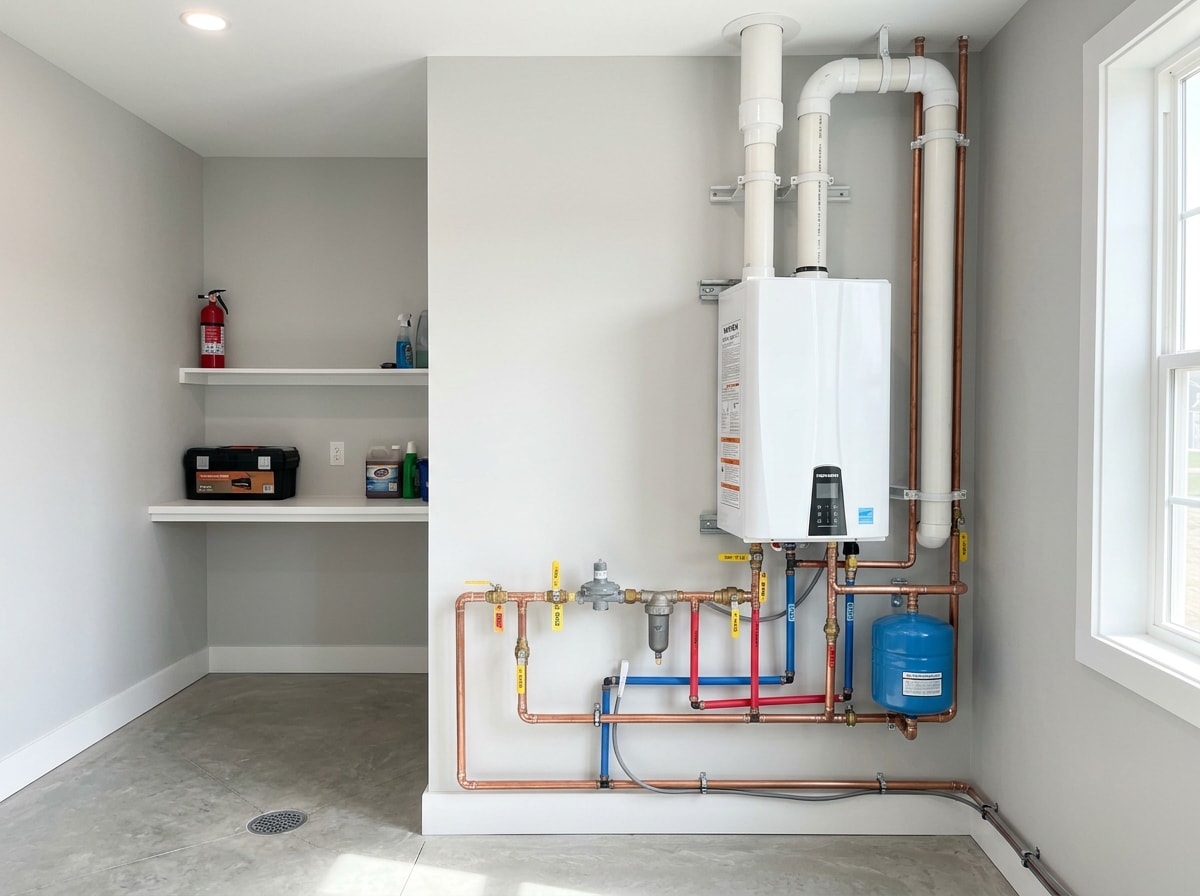
People often treat the water heater as an appliance sitting next to the plumbing. It is plumbing.
It sits directly on the supply side, it has its own shutoff and relief valve, and when it fails it fails into your house.
Storage tanks generally last eight to twelve years depending on water quality and whether the anode rod was ever checked. Annual maintenance is the cheapest way to reach the top of that range, and flushing sediment matters most in hard water areas.
If yours is leaking, running cold or past its expected life, compare water heater repair against a full replacement or a tankless installation before the decision gets made for you at 6am on a Sunday.
How Much Does a Plumber Make a Year?
Pay is strong for a trade with no degree requirement. The median annual wage for plumbers, pipefitters and steamfitters was $63,800 in May 2025 , according to the Bureau of Labor Statistics Occupational Outlook Handbook.
Demand is not slowing either. Employment is projected to grow 7 percent from 2025 to 2035, much faster than the average for all occupations, with about 42,000 openings projected each year over the decade.
Earnings vary widely by region, specialty and whether you are employed or self-employed. Self-employed plumbers can out-earn staff plumbers, though that figure is revenue before insurance, vehicles and tools come out of it.
When to Call a Licensed Plumber
Some jobs are genuinely DIY. Replacing a flapper, a supply hose or an aerator is fine with basic tools.
Call a professional when you see:
- Water pressure that drops across the whole house
- Repeated backups in more than one fixture
- Sewer odor indoors or gurgling drains
- Any leak inside a wall, ceiling or slab
- Discolored water, or corrosion at pipe joints
- A water heater that leaks from the tank body
We handle these across Mountainside, Westfield, Morristown and Jersey City, and you can see the whole service range on our homepage.
Not sure whether what you are hearing is a clog or a vent problem? Get a free estimate and we will tell you which one it is before any work starts.
FAQ
What is plumbing in simple words?
Plumbing is the system that brings clean water into a building and safely removes dirty water. It includes the pipes, fixtures, valves and drains that make that happen, plus the trade of installing and repairing them.
What are the 3 types of plumbing?
By function, the three are potable water supply, sanitary drainage and stormwater drainage. Some sources use "three types" to mean residential, commercial and industrial plumbing instead, so check which sense the source intends.
What are the two main plumbing systems?
Supply and drainage. Supply brings fresh water in under pressure. Drainage carries wastewater out using gravity and pipe slope. The two never interconnect, which is what protects drinking water.
Why is it called plumbing?
The word comes from the Latin plumbum, meaning lead, because lead was the standard pipe material in Roman aqueducts and remained common for centuries. Lead is no longer used for potable water piping, but the name stuck.
What does a plumber do all day?
Installs and repairs pipe, connects fixtures and appliances, clears blockages, finds leaks, tests pressure and works from plans on new construction. On larger jobs, a significant share of the day is coordination with other trades.
Is plumbing a good career?
The pay is above average for a trade entered through paid apprenticeship, and employment is projected to grow much faster than the average for all occupations through 2035 . The tradeoffs are physical work, on-call hours and emergency callouts.
How long does home plumbing last?
It depends on material. Copper and cast iron commonly run 50 years or more, PEX and CPVC roughly 40 to 50, and galvanized steel often less than 50 because it corrodes internally. Water chemistry and installation quality change all of those numbers.
What is the difference between plumbing and pipefitting?
Plumbers work mainly on potable water, drainage and gas piping in buildings. Pipefitters work on piping that carries process fluids, steam or chemicals, often industrial and often at higher pressures. The federal wage data groups both occupations together.
What are the most common plumbing problems in a home?
Running toilets, dripping faucets, slow or clogged drains, low water pressure, water heater failures and hidden supply line leaks. Most start small enough to catch early if you know the meter test and check under sinks a couple of times a year.