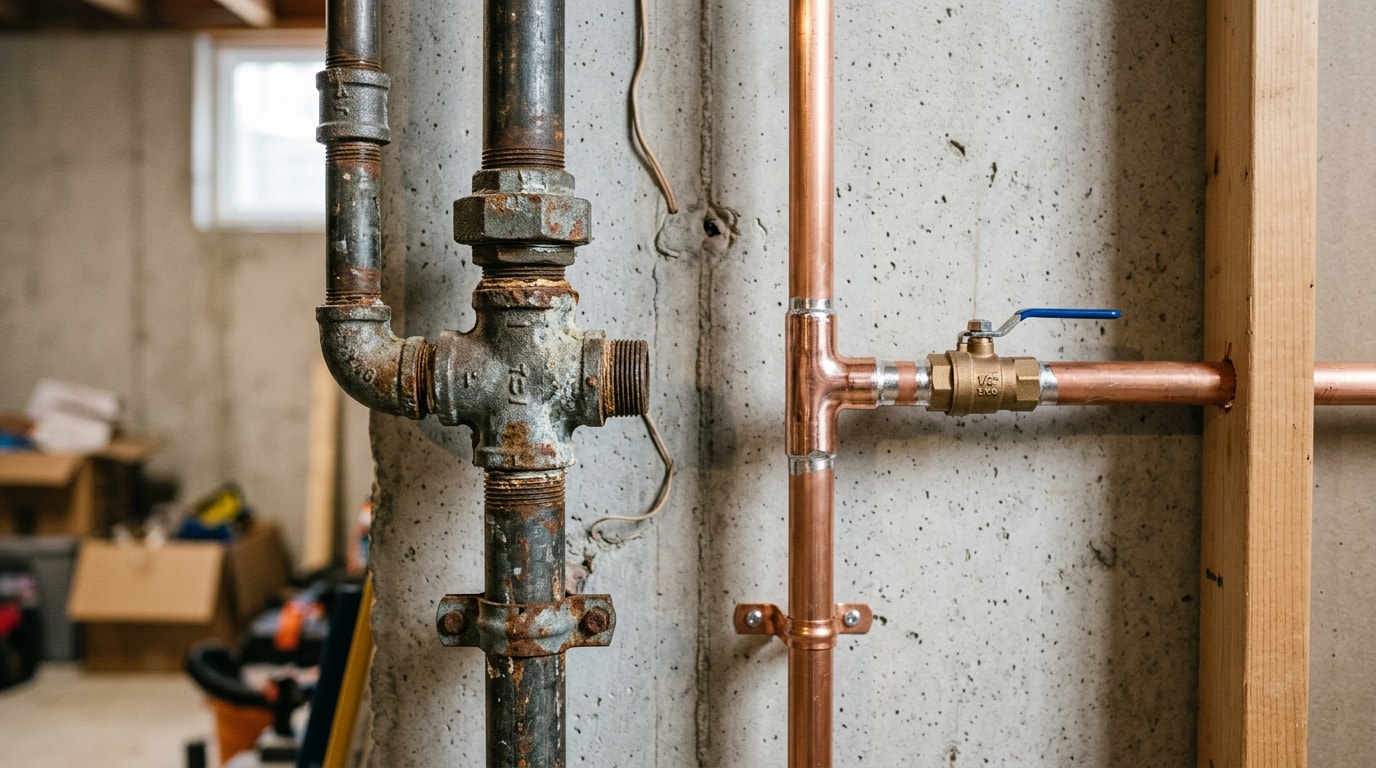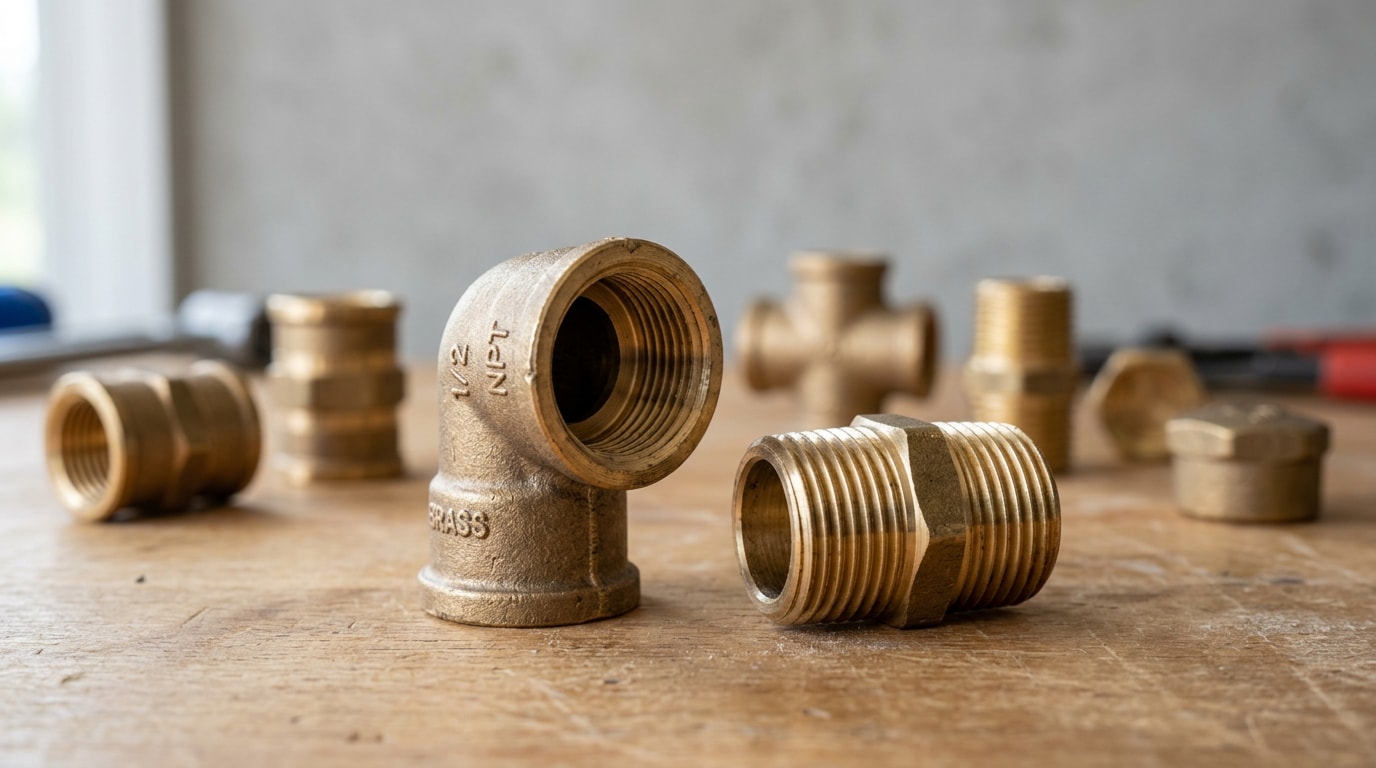
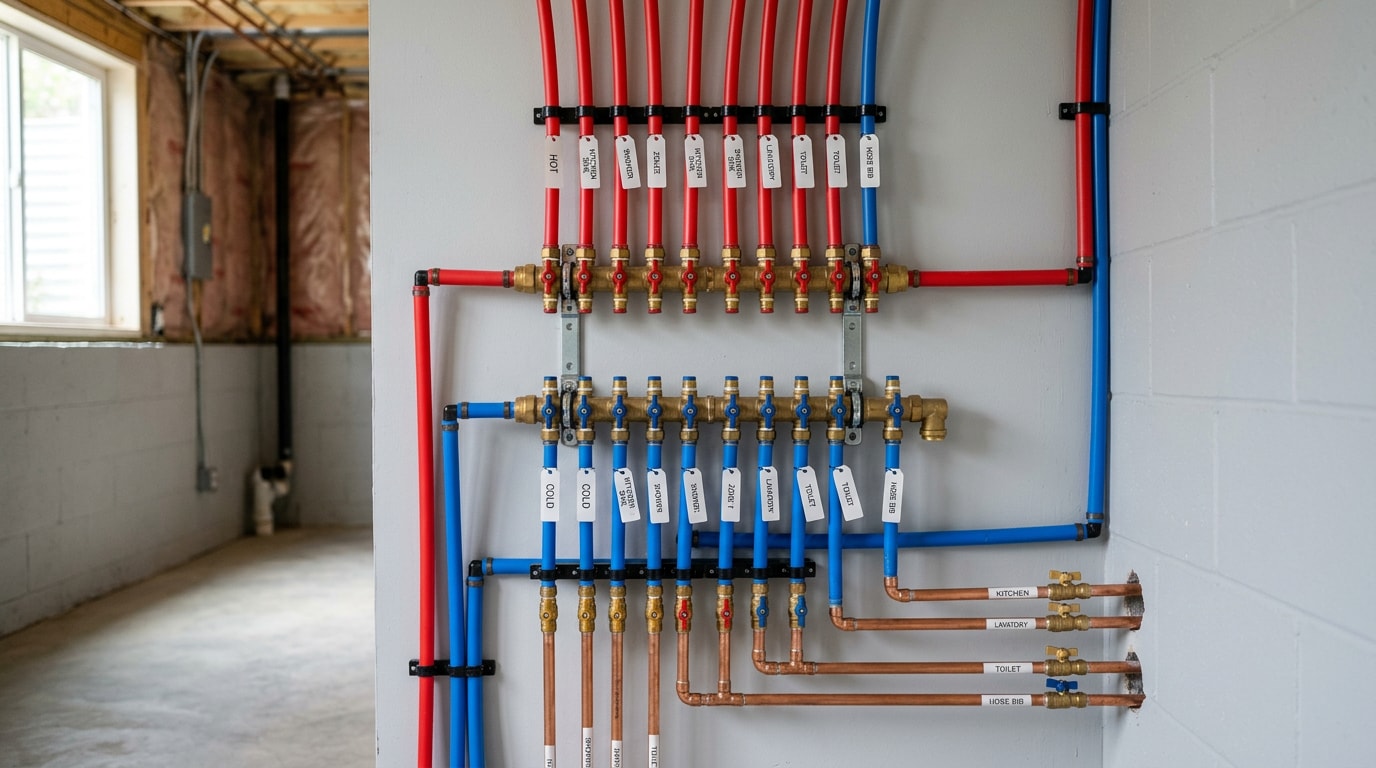
Ask three plumbers why is PEX plumbing bad and you will get three different answers, because PEX is not defective, it is conditional. Cross-linked polyethylene holds up well inside walls at normal water temperatures, and it fails early in four specific situations most homeowners never hear about until the drywall is open. Here is exactly where the limits are, and how to read them off the pipe already in your house.
Why Is PEX Plumbing Bad? The Short Answer
PEX becomes the wrong pipe under four conditions:
- Sustained high heat. Above roughly 180°F, the polymer oxidizes faster and the pressure rating drops.
- Direct sunlight. UV damage is cumulative and permanent, and much of it happens before installation.
- Rodent access. Mice and rats chew through supply tubing in attics and crawlspaces.
- Heavily chlorinated hot water. Chlorine and chloramine attack PEX through the same oxidative pathway as heat.
None of those are manufacturing defects. They are environment and installation problems. If your home does not hit any of the four, PEX is a reasonable supply pipe. If it hits two or more, copper deserves a hard look.
New to the material itself? Start with our homeowner guide to what PEX plumbing is, then come back for the failure modes below.
Chemical Leaching and the Taste or Smell of Your Water
Independent testing has found trace organic compounds migrating from some PEX products into drinking water, including MTBE, ETBE, TBA and assorted VOCs. Results vary widely by brand, by pipe age, and by how long water sat stagnant before sampling. New pipe generally leaches more than pipe that has been in service a while.
Separate two different complaints here.
A plastic taste or odor in the first weeks after installation is common and usually fades as the system flushes. That is a nuisance, not a hazard.
The safety question is governed by certification. Piping sold for potable water in the U.S. must pass NSF/ANSI 61 health effects testing for contaminant migration, along with NSF/ANSI 372 for lead content. Those markings are printed on the pipe itself. If your tubing carries neither, that is a real reason for concern.
UV Light Damage Starts Before Installation
Sunlight breaks the polymer down, and the damage does not reverse.
The part most articles miss: a lot of that exposure happens before the pipe is ever in a wall. Coils sitting in an open truck bed. Bundles stacked uncovered on a job site for three weeks in July.
Manufacturer exposure windows vary, with many products rated for roughly 30 days to a few months of direct sun. Past that limit the tubing can turn brittle and fail early while still looking perfectly fine. PEX left permanently exposed, including in a sunlit unfinished basement, should be sleeved or insulated.
This rules PEX out for exposed outdoor runs entirely.
Rodent Damage
Mice and rats chew PEX. It happens in attics, crawlspaces, and garage ceilings, anywhere tubing crosses open joists with nothing protecting it.
A chewed supply line is not a cheap repair. The tubing itself costs almost nothing. The water damage, ruined drywall, and any mold remediation are what hurt, which is why a chew-through often turns into an emergency leak repair call at 2 a.m.
Prevention is straightforward:
- Seal exterior entry points before the pipe goes in.
- Sleeve vulnerable runs in conduit.
- Reroute tubing away from known rodent paths.
If your house has a history of attic pests, say so before the installer starts pulling line.
Heat and Pressure Limits
Most PEX carries a dual rating that falls as temperature climbs: roughly 160 psi at 73°F, about 100 psi at 180°F, and around 80 psi at 200°F. That inverse relationship is the whole point. The hotter the water, the less pressure the pipe can carry over the long run.
Those ratings come from ASTM F876, the PEX tubing specification, which pressure rates the tubing at three temperatures. Any 210°F number on a spec sheet is an intermittent rating, the kind of spike a relief valve produces, not a continuous operating temperature.
This is why a short metal connector nipple belongs between the water heater outlet and the PEX run. It buffers the hottest section of the system.
Tankless units and high-temperature boiler loops deserve extra scrutiny, because they can hold outlet temperatures at the top of the range for long stretches. Our water heater installation and repair team checks that transition fitting on every hot water call.
Chlorine: The Failure Mode Almost Nobody Checks
Here is the part you can act on today, and the part most "PEX is bad" articles skip.
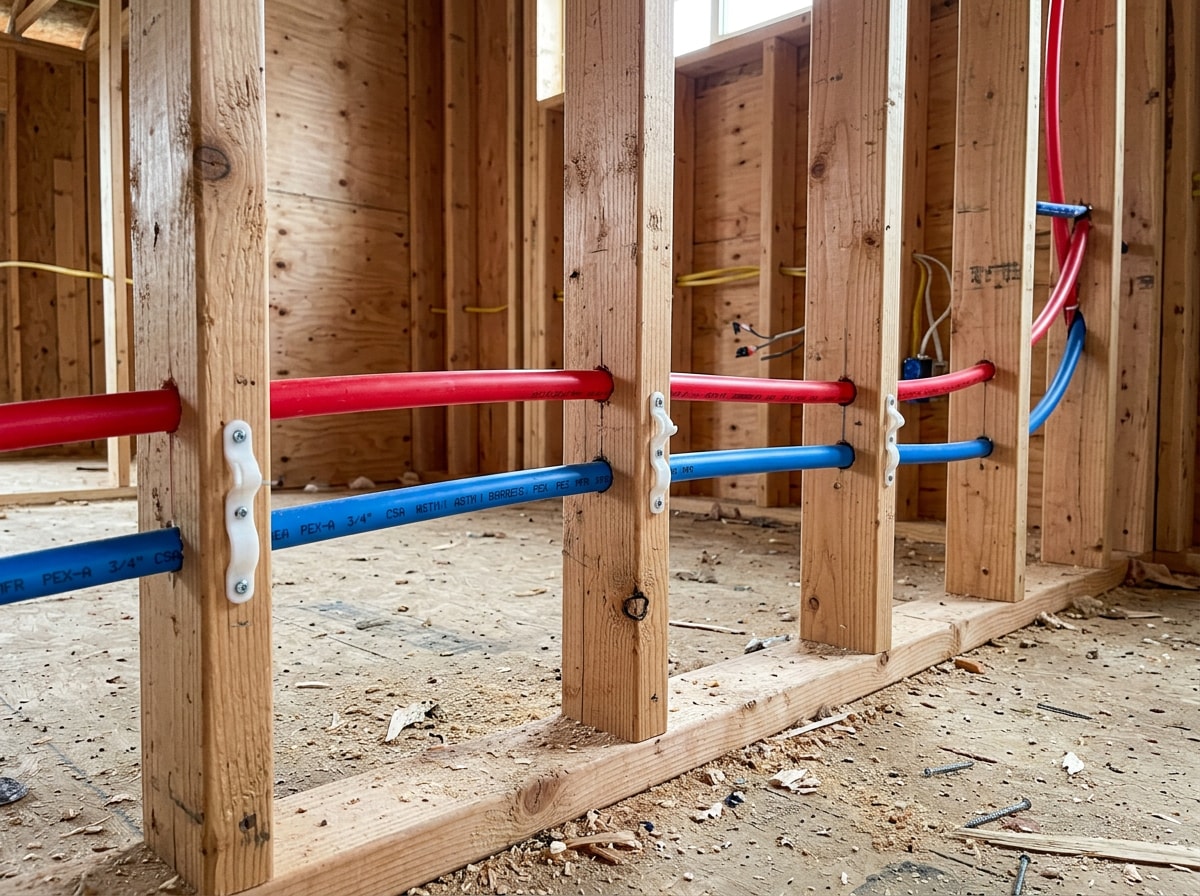
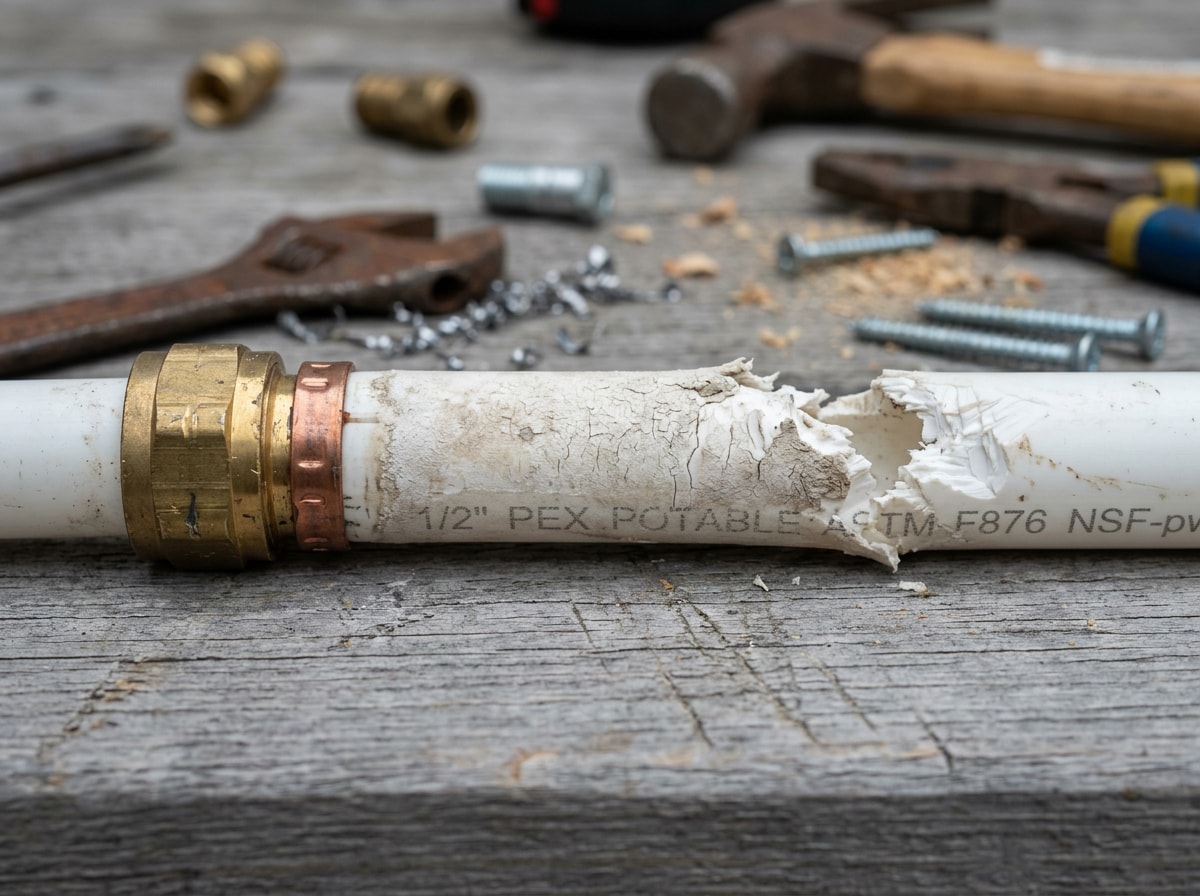
Not all PEX has the same chlorine tolerance, and the rating is printed right on the pipe. Look for the ASTM F876 designation code, a four-digit number such as PEX 5306. The first digit is the chlorine resistance rating.
| First digit of the code | What it claims |
|---|---|
| 0 | No chlorine resistance rating tested or claimed |
| 1 | Rated for about 25 percent of service time at 140°F |
| 3 | Rated for about 50 percent of service time at 140°F |
| 5 | Rated for 100 percent of service time at 140°F, the highest rating |
The balance of service life in each case is assumed at 73°F. The Plastics Pipe Institute guide to chlorine resistance ratings explains how those ratings are derived from hot chlorinated water testing.
Practical takeaway: on a hot water recirculation loop, or on municipal water with aggressive disinfectant levels, a "0" or "1" pipe is a materially different product from a "5" pipe at almost the same price. Go read the print on your existing lines. It takes two minutes with a flashlight.
On repipes around Union and Morris County, the two spots we find degraded first are the first 18 inches off the water heater and any tubing a previous installer left coiled in the sun. The pipe in the middle of the walls is usually fine.
Lifespan: 25 to 50 Years, and Why the Range Is So Wide
Published estimates put PEX at roughly 25 to 50 years. Copper is commonly cited at 50 to 70 years or more.
That spread is not vagueness. It reflects four real variables:
- Water chemistry, chlorine and chloramine levels above all.
- Average operating temperature on the hot side.
- UV exposure the pipe absorbed before it was installed.
- Installation quality, especially fitting selection.
The cost math follows from that. PEX saves money upfront, and those savings only hold if the system reaches the top of its range. If it lands at the bottom, you are paying for a whole-home repipe a couple of decades sooner than planned.
PEX-A vs PEX-B vs PEX-C
Three manufacturing methods produce three noticeably different products.
- PEX-A uses the peroxide (Engel) method. Most flexible, best kink recovery, and a kink can often be heated out with a heat gun.
- PEX-B is silane cured. Stiffer to work with, and generally shows the strongest chlorine resistance ratings.
- PEX-C is irradiated. Cheapest, stiffest, least forgiving of kinks and rough handling.
The reframe worth keeping: much of what people call bad PEX is really cheap PEX-C, badly installed. Grade and workmanship explain more failures than the material category does.
PEX vs Copper vs PVC and CPVC
| Factor | PEX | Copper | PVC / CPVC |
|---|---|---|---|
| Typical lifespan | 25 to 50 yrs | 50 to 70+ yrs | 40 to 75 yrs (CPVC about 50) |
| Max temp rating | About 200°F | 400°F+ | PVC about 140°F; CPVC about 200°F |
| Freeze tolerance | Good, expands | Poor, splits | Poor, brittle |
| Corrosion behavior | Immune, but degrades from chlorine and UV | Pinholes in acidic water | Immune; CPVC can crack with age |
| Relative installed cost | Lowest | Highest, 2 to 3x PEX | Low to moderate |
| Outdoor or exposed runs | No | Yes | Only if UV shielded |
| Recyclable | Rarely | Yes, indefinitely | Limited |
Pick this when: PEX for interior supply lines, retrofits, and cold-climate homes. Copper for exposed runs, high-heat connections, and maximum service life. PVC for drains, CPVC for hot water where code allows and rodents are a concern.
One thing a good inspector checks on an existing PEX system: the fittings and the first two feet off the water heater. Chalky surface texture, discoloration, or green crust around brass crimps tells you more about remaining life than the install date does.
Homeowners in Westfield, Mountainside, and the surrounding towns can have an existing system assessed before committing to either material. Get a free estimate and we will pull the markings off your pipe and tell you what you actually have.
When PEX Is Still the Right Call
Most of the time, honestly.
It is code approved nationwide, it survives freezes that split copper, it needs fewer fittings, and fewer fittings means fewer leak points. No torch, no solder, no flux in your walls.
The failure stories cluster in a narrow band: cheap tubing, sun-baked stock, unprotected attic runs, and hot recirculation loops on aggressive water. Avoid those four and the material earns its reputation. You can see the rest of what we handle on our plumbing services page or back on the Aumenta Plumbing homepage.
FAQ
Is PEX safe for drinking water?
PEX certified to NSF/ANSI 61 and NSF/ANSI 372 is approved for potable water across the U.S. Some testing has found trace organic compounds in new pipe, usually declining over time. Look for the certification markings printed on the tubing, and flush new lines thoroughly before use.
Why do some plumbers refuse to install PEX?
Hesitancy clusters around four situations: high-heat applications, heavily chlorinated water, exposed or outdoor runs, and rodent-prone attics. Some older plumbers also learned on copper and trust joints they soldered themselves. Outside those cases, most plumbers install PEX routinely.
How long does PEX plumbing last?
Roughly 25 to 50 years. Water chemistry, operating temperature, pre-installation UV exposure, and installation quality decide where a given system lands in that range.
Is PEX better than copper?
Cheaper, faster, and far better in a freeze. Copper wins on service life, heat tolerance, exposed runs, and recyclability. For interior supply lines in a normal home, PEX is usually the better value.
Can PEX be used for hot water lines?
Yes, that is a standard application. Keep continuous water temperature at or below about 180°F, use a metal connector nipple at the water heater, and choose a high chlorine resistance rating for recirculation loops.
Does PEX plumbing affect home insurance or resale?
Sometimes, and install date matters most. Systems from before roughly 2010 to 2011 draw more underwriting attention because of historic fitting failures, and carrier posture varies by state. Confirm with your own insurer rather than assuming.
Have there been PEX lawsuits?
Yes, but they targeted specific manufacturers and specific fitting defects, not PEX as a category. Brass-fitting dezincification, where zinc leaches out of high-zinc brass and weakens the fitting, drove much of that litigation. Low-zinc brass and polymer fittings addressed the root cause. This is general information, not legal advice.
Is PEX bad for the environment?
It has real drawbacks. Cross-linked polyethylene cannot be recycled in most municipal streams, while copper is recyclable indefinitely. On the other side, PEX ships lighter, needs no soldering energy on site, and wastes less material through fewer fittings.
Is PEX allowed by code everywhere?
PEX is recognized in the major U.S. model plumbing codes and is standard in new construction. A few jurisdictions have adopted extra local restrictions over the years, so confirm with your local building department before a full repipe.
Questions about your own pipe? Contact our licensed plumbers for a free estimate. Aumenta Plumbing is a licensed, insured New Jersey plumbing contractor, and our techs repipe homes in Union, Morris, and Somerset counties every week.